
In our earlier article we looked at why brand communities have become one of the most valuable assets in a marketer’s toolkit. Belonging, not points, is now the real marker of loyalty.
In this article we will look at how putting stories first is an important way to engage with the community audience.
If you are responsible for CRM, content or community, you already know the theory. What you may be missing is a clear, practical way to move from a collection of channels and campaigns to something that feels like a living community.
Drawing on Dialogue’s work with long standing membership communities and our Power of Brand Communities research, this article offers a simple playbook you can adapt - whether you are refreshing an existing community or starting to design one.
Read part one – Why brand communities matter more than loyalty schemes.
Start with a one-page community brief
Before you launch a new platform, brand experience or content series, capture the essentials in a short community brief. It will keep internal teams aligned and stop you defaulting to ‘yet another social channel’.
Five questions to answer:
- Who is this community for?
- Not ‘everyone who likes our brand’, but a specific group with defined needs and passions.
- What do they get here that they cannot get anywhere else?
- Access, recognition, knowledge, belonging – be concrete.
- What shared passion, value or activity brings them together?
- A sport, a craft, a creative scene, a cause, a lifestyle.
- What role does this community play in our business?
- Is it mainly about retention, advocacy, insight, innovation – or a combination.
- How will we know it is working in 12 months?
- Think beyond raw follower numbers. Are you aiming for repeat engagement, member generated content, increased lifetime value or all three.
You can write this on a single page. It becomes your reference point when you start designing experiences, content and print.
Design an experience ladder across digital, physical and live moments
Strong communities give people different ways to participate over time. We find it helpful to think in terms of an experience ladder with three rungs.
Foundations – your always-on hub digital hub
This is where members know they can find ‘their people’ on a regular basis. It might be:
- A dedicated app or forum
- A private social group
- A member’s section of your site
- A personalised content environment supported by regular email communication
In most mature membership communities, this foundation is digital-first – a place members return to frequently, shaped by their interests and behaviour and supported by physical touchpoints, such as events or print products, that reinforce belonging.
The job of the digital hub is to host the ongoing conversation. It should feel calmer and more focused than the open social feeds that surround it.
Example: Soho House’s always-on hub
A useful reference point here is Soho House’s members’ app. It is best known for its physical spaces, but the strength of the community comes from what happens between visits. The members app acts as the ‘always-on’ hub where people can keep up with what is happening, book into experiences and stay connected to the wider network.
What makes it work as a foundation layer:
- It is clearly member first - the tone and utility are designed for people inside the membership, not for a public audience
- It blends practical value with belonging - events, bookings and local recommendations sit alongside editorial and community conversation
- It gives members a reason to return regularly - the hub is not just a noticeboard, it is part diary, part guide, part meeting place.
Do next
- Choose one primary hub rather than scattering effort
- Commit to showing up there consistently (for example, three valuable posts or touchpoints a week)
- Make it clear what members can expect to find there that they will not find elsewhere
2. Peaks - your hero experiences
Experiences are the peaks that punctuate the rhythm of the community year. They can be physical, digital or a blend of both. The most effective peak moments are designed with their digital afterlife in mind – from live streams and social coverage to follow up content delivered through member portals and personalised emails.
- Smallscale, high engagement experiences designed around a shared passion scale, high engagement experiences designed around a shared passion
- Larger gatherings, festivals or rallies that bring the community together
- Behind the scenes access to places, people or processes members would not normally see
- Immersive digital or hybrid moments that allow the wider community to participate remotely
From our work with membership communities we know that these peaks are where memories, friendships and stories are forged. They also generate a rich seam of content for months afterwards.
When planning a hero experience, ask:
- What shared passion are we centering this around?
- How do we keep the guest list focused enough that it still feels special?
- Where are the natural ‘participation moments’ - co created art, small group sessions, member contributions?
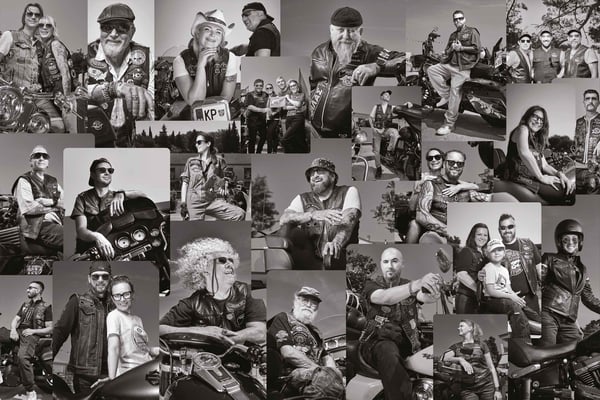
- How will we capture the atmosphere through photography, video and words? In another of our blogs we discuss the European H.O.G. Rally for Harley Owners Group and how it is a valuable asset for inspiring content creation.
3. Anchors - tangible artefacts that reinforce digital belonging
The third rung is often overlooked - the tangible things that help the experience live on. For more than a decade, Dialogue has created print for brand communities, from long running magazines to special editions linked to key events. The most loved pieces are not brochures, but keepsakes:
- A limited-edition book capturing a major rally or festival
- A beautifully produced members magazine that celebrates people as much as product
- A physical pass, map or programme that is worth keeping on a desk or coffee table
In a world where most community interaction is digital, these printed artefacts act as anchors. They remind members that they belong to something real.
Example: H.O.G.: turning print into a keepsake
A strong example of the ‘anchors’ rung is our work for Harley-Davidson’s Harley Owners Group (H.O.G.), where print plays a practical and emotional role in the membership experience.
Alongside the always-on digital programme, we produce an annual printed member magazine and a printed membership guide in 17 localised editions across Europe, Canada, Asia and Oceania. These are not treated as standalone collateral - they are designed as tangible chapters of the community story, delivered to members’ homes, built to be handled, kept and revisited.
Because H.O.G. is driven by identity and shared experience, these pieces do something digital cannot. They make the membership feel real in the hand, they give space for longer member stories and photography to breathe and they create a physical object that can sit on a desk or coffee table long after an event or season has passed. They also help unify a global community - a consistent experience, expressed in local language and culture, that signals you are part of something bigger.
Do next
After each peak moment, ask “what physical chapter of this story should exist in six months’ time” - and plan towards it.
Build a weekly content menu across channels
Once your experience ladder is in place, the question becomes what to publish, and when. Rather than starting with platforms, start with a simple content menu built around four layers.
Hero stories - monthly
These set the myth and mood of your community. These are often introduced through email or surfaced in a member hub, before being extended across owned digital channels.
Examples:
- A short film about a maker, designer or member whose story embodies your values
- A long form interview that goes deeper than a standard campaign Q&A
- A photo essay from a key event or project
You do not need many of these, but you should make them count.
Do next
Choose one hero story you want your community to remember this quarter. Decide whose journey it will follow and which format suits it best.
Member stories - weekly
These are the heartbeat of the community. Member stories perform particularly well when delivered through personalised email and member portals, where recognition feels direct rather than broadcast.
Examples:
- Member profiles shared through personalised emails, member portals, apps or magazines
- ‘A day in the life’ content created with real customers or club members
- Features that show how people use your products in their real world
Our own research has shown that community members are significantly more likely to advocate for a brand when they feel recognised and heard. Highlighting their stories is one of the simplest ways to do that.
Do next
Create a simple way for members to put themselves forward - a short form, a recurring call out, or an invitation in your emails. Aim to spotlight at least one member a week.
Utility content - several times a week
This is the practical, helpful material that makes life easier or more enjoyable for members. In many communities, this layer is primarily delivered through digital channels – particularly personalised email, app notifications and member portals – where frequency and relevance matter more than polish.
Examples:
- Styling tips or how to guides
- Guides to experiences, destinations or cultural moments that matter to your audience
- Behind the scenes pieces that demystify your craft or processes
This kind of content performs well in emails and social and often prompts useful questions you can feed back into product and service teams.
Do next
List the ten questions your team are most often asked by customers. You have ten utility posts ready to be written.
Live moments - monthly
Live moments create a shared ‘now’ for the community:
- Live Q&A with a designer, CEO or community manager
- Studio tours or walk throughs streamed to your hub
- Live critiques, consultations or workshops
They do not have to be big productions. What matters is regularity and access. Promotion and follow up are just as important as the live moment itself, with CRM driven communications helping build anticipation and sustain momentum.
Do next
Pick a simple live format and a recurring slot - for example, ‘first Thursday at 6pm’. Make it part of the rhythm of your community.
Use personalised digital communications to create rhythm and relevance
For many membership communities, personalised digital communications are the connection that holds the experience together.
They play several distinct roles:
- Create recognition at scale
Regular, segmented email programmes and member portals allow brands to respond to different behaviours, interests and life stages, ensuring members feel recognised rather than broadcast to. - Guide participation across the experience
Digital touchpoints surface relevant content, promote live moments and help members navigate what’s happening next in the community. - Build habit and trust over time
A consistent cadence of useful, relevant communications helps establish rhythm, encouraging members to return and engage regularly. - Join up digital, live and physical moments
When treated as part of the experience – rather than a distribution channel – digital communications connect live moments and tangible artefacts into a continuous membership journey, rather than a series of campaigns.
Turn creators into hosts and editors
Influencers are no longer just billboards at the edge of your community. The most effective creators now act as hosts and editors.
When you look for partners, focus on those who:
- Already nurture some form of community, not just a following
- Have a clear point of view that aligns with your values
- Are comfortable in live, interactive formats as well as polished posts
There are three useful roles they can play.
- Host
- Invite them to host in person events, salons or live streams, welcoming members and guiding conversation.
- Editor
- Ask them to shape a recurring content strand – for example, a regular feature in your magazine, a short video series or a theme for UGC.
- Connector
- Use their knowledge of their own community to inform your planning. Ask what their audience genuinely wants from a brand like yours.
This approach applies whether you are working with a well-known creator or a micro influencer embedded in a niche scene. In both cases, it moves the relationship from one off posts to genuine collaboration.
Example: Peloton’s instructors as hosts and editors
Peloton shows what happens when creators are treated as the centre of the membership experience, not an add-on. Its instructors are the talent, the hosts and the editorial voice - leading live, interactive sessions, setting the tone of the community and building rituals members return to week after week.
For premium brands, the lesson is less about fitness and more about structure. Peloton’s creator relationships are ongoing and programmatic. The creator is accountable for a recurring format, a consistent point of view and a shared ‘now’ that members feel part of. In practice, that maps neatly to the three creator roles:
- Host - running regular live moments that members schedule into their week
- Editor - shaping repeatable content series with a clear tone and agenda
- Connector - reflecting member sentiment back to the brand and sparking peer-to-peer interaction
It is a useful reminder that the goal is not reach, it is return. The best creators help you build a rhythm members want to come back to, because it feels like their community, not your campaign.
Use print as a community artefact
For many of the communities Dialogue has supported, print remains one of the most powerful tools in the mix.
A well considered print piece can:
- Make membership feel real
A weighty magazine or beautifully designed booklet landing on a doormat is physical proof that the community exists beyond the screen. - Create space for depth
Longer interviews, photo essays and member stories can breathe in print in a way that is harder to achieve on social. - Support partner value
Print can provide a premium environment for brand partnerships that add value for members and make the community commercially sustainable. Our experience shows that sustainable partnerships are built when commercial goals are balanced with editorial integrity, creating value for members first, and commercial return as a result.
The key is to treat print as part of the story, not an isolated channel. Tie it to your experience ladder and content menu so each edition feels like a chapter in an ongoing narrative.
Keep score with three simple questions
Measurement can quickly become complex, but at community level three questions go a long way:
- Are members coming back?
- Look at active members over time, repeat attendees at events, open and click rates on community specific emails.
- Are members talking to each other, not just to us?
- Track member-initiated posts, comment threads between members and peer to peer replies.
- Are new stories appearing that we did not prompt?
- Note when members start sharing their own content, organising meet ups or suggesting ideas unprompted.
Those signals point towards a community that is becoming self-sustaining. Combined with traditional metrics such as lifetime value and repeat purchase, they give a rounded view of impact.
If you’re exploring how to build a more connected, sustainable brand community, see how Dialogue supports membership organisations across digital, live and print.
Get in touch
If you’re exploring how to build a more connected, sustainable brand community, see how Dialogue supports membership organisations across digital channels and content ecosystems.

Read more insightful articles
See more from the blog Content
Brand communities – Part 2: A practical playbook for premium brands
 Content
Brand communities – Part 1: Why brand communities matter more than loyalty schemes
 Automotive
Behind the lens at the European H.O.G. Rally: how brand immersion drives creative agility
 Content
How brands can reap the rewards of localised content for international markets
Proud to be a winner of industry awards, recognised as content marketing experts in print and digital media.