-
Content Marketing For
Luxury Audiences >

-
Trusted By
Leading Automotive Brands >

-
Experts In
Travel & Hospitality >

There was a time when a sleek card and a tiered points system were enough to signal loyalty. Today, a free upgrade or early access email rarely feels like a true perk. High value customers are not short of offers - what they are short of is brands they feel genuinely connected to.
At the same time, the cost of winning attention has risen sharply. Paid media is more expensive, social reach is more volatile and younger audiences are increasingly sceptical of generic, one-way messaging. In that context, brand communities have shifted from “nice to have” to strategic asset.
In our original Power of Brand Communities report, we found that 37% of consumers were more likely to stick with a brand if they were part of its community, and 40% were likely to spend more. Among 25- to 34-year-olds, that rose to 58%. For luxury sectors specifically, 57% of 25- to 34-year-olds said it was important to be part of a brand community. Those are not niche numbers.
This mirrors a 2024 report by strategic communications firm Confidant, which found that 45% of gen Z, millennial, and gen X Americans feel more connected to subcultures than mainstream culture.
If loyalty schemes are the rational side of retention, brand communities are the emotional side. They offer the one thing algorithms and discounts cannot: a sense of belonging.
Why brand communities matter now
Several shifts sit behind the renewed interest in communities.
1. From digital town squares to walled gardens
The early promise of social platforms as “digital town squares” has been eroded by algorithms that prioritise monetisation over meaningful interaction. Brand reach is less predictable, and even highly engaged audiences can be difficult to access without paid support.
Facebook organic reach averaged just 1.41% in January 2025, with X at 1.66% and Instagram at 4.55%, illustrating how little of a brand’s audience sees unpaid posts.
We have seen this in our work across sectors: fans become “likes” on a brand page rather than people a brand can reliably reach or recognise. A community that sits on a platform the brand does not own is always rented, never owned.
2. Rising acquisition costs
As digital ad markets have matured, customer acquisition costs have increased. Our research with B2C marketers highlighted the imbalance: more than a third said new customers were their sole focus, despite the fact that repeat customers represent a disproportionate share of revenue.
Cross‑industry analyses in 2025 report that average customer acquisition costs have risen by more than 200% over roughly the last decade, driven by higher ad prices and more competition for attention online.
In other words, budgets are still often chasing the most expensive outcome.
Brand communities rebalance that equation. They support acquisition through advocacy and word of mouth, but they are built primarily to deepen relationships with people who have already chosen you.
3. A value driven, community first consumer
For Generation Y and Generation Z in particular, value-based purchasing is now the norm. Deloitte, IBM and others have all pointed to younger consumers’ willingness to walk away from brands whose behaviour does not match their stated values.
Our own benefits of brand communities research reflects that too. Across luxury, automotive and travel, between a third and a half of consumers said being part of a brand community was important, rising significantly amongst 16- to 34-year-olds. They are looking for spaces where they can connect with like-minded people, enjoy exclusive experiences and feel that their voice matters.
4. Loyalty schemes under strain
Traditional loyalty programmes still have a role, but they struggle to create this kind of emotional connection. Rewarding a behaviour can encourage repeat transactions, but it does not necessarily create an advocate. Once the reward is removed or becomes too difficult to reach, the ‘loyalty’ can evaporate.
Brand communities, by contrast, are built on shared purpose, belonging and participation. They can work alongside loyalty schemes, but they change the centre of gravity from points to people.
What is a brand community?
We define a brand community as a group of people who have developed an emotional attachment or affinity towards a brand after purchasing products or engaging with services in some way. The community reflects a shared sense of purpose, passion and values, inspiring them to seek connections beyond casual interactions on social media.
There are a few important implications in that definition:
- It is more structured than a “tribe”
- Tribes are loose, interest-based groups. A brand community is anchored around a specific brand, with clearer membership, shared spaces and often a formal programme behind it.
- It is built on dialogue, not just broadcast
- Members talk to each other as well as to the brand. Social platforms are now closer to paid media channels than true communities. A real brand community requires conversation, not just content.
- It is a long-term commitment
- A community is not a campaign that can be switched on and off. It is a social contract. That is why we often talk about brand communities as a specialist area within loyalty rather than a short-term tactic.
The psychology behind this is powerful. As Dr Charles Seger from the School of Psychology at the University of East Anglia told us, belongingness is one of our basic human needs. People stay loyal to brand communities that provide a unique experience, allow them to express their self concept and offer a meaningful community of like-minded individuals.
Three models of luxury brand community
Although every brand community is unique, patterns do emerge. In our work across sectors, we see three broad models that apply particularly well to premium and luxury brands.
1. Activity driven communities
These are built around a shared action or pursuit rather than a single product.
- Run clubs and outdoor collectives have been a mainstay in sportswear, but the logic translates to wellness, craft and culture too: people bonding over what they do together.
- In Patagonia’s world, for example, the Worn Wear programme turned repair and reuse into a participatory movement, inviting customers into gear repair workshops, mobile activations and trade in schemes. The community is built around action on sustainability, not just ownership of a jacket.
- For luxury lifestyle brands, this might mean curating experiences around art, performance, gastronomy or design where the brand is a host, not the sole focus.
Activity driven communities are particularly powerful because they generate their own momentum. Members meet each other, build their own rituals and create content around their shared experiences.
2. Personality driven communities
Here, the centre of gravity is a person: a founder, creative director or recognisable figure.
- Glossier famously began as a content first beauty blog, Into The Gloss, before evolving into a brand. The community grew around the founder’s voice and the routines and cupboards of real readers, long before products arrived on shelves.
- Creator led brands such as Rhode show a similar pattern in a new medium. Fans rally around the person and their worldview, with product drops functioning as chapters in an ongoing story.
In luxury, creative directors and house ambassadors often play this role. A strong personality gives a human focal point for the community, especially when they are willing to show up in live conversations, behind the scenes content and events.
3. Values based communities
These are anchored in a clear stance or belief that members share.
- Fenty Beauty reframed beauty by putting inclusivity at the centre, from shade ranges to casting. The community formed around the idea that everyone should feel seen.
- Sephora’s community combines practical peer to peer advice with a culture of inclusivity and experimentation. It is not just a help forum but a space where members can express identity and creativity.
For luxury brands, values-based communities are a natural fit with topics such as sustainability, craftsmanship, diversity or cultural patronage. The key is to move beyond statements into visible action and participation.
Most successful communities combine elements of all three: experiences to do together, personalities to connect with and values to align around.
What strong communities have in common
Whatever their shape, high performing brand communities tend to share a set of traits. These are the markers we look for when we work with brands on community strategy.
- Clear shared purpose
- Members can answer “what are we here for” in a sentence. It might be to ride together, learn together, champion a cause or live a particular lifestyle more fully.
- Recognisable symbols and rituals
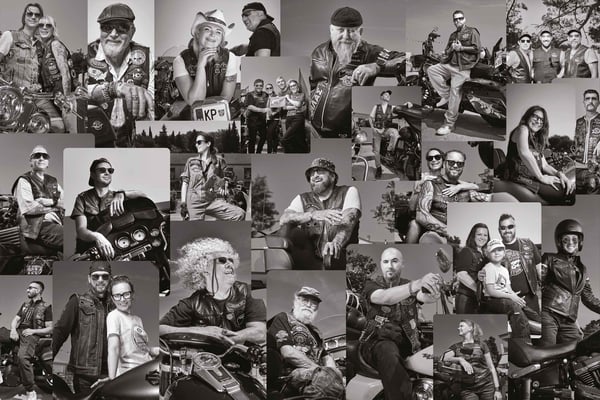
- In the Harley Owners Group (H.O.G.), which we have supported for many years, these range from chapter patches and pins to rallies and long running magazine features. In luxury fashion and beauty communities, this might be specific hashtags, recurring events, signature drops or member recognition moments.
- Two-way communication
- Brands are not only talking at members. They are asking for input, listening and feeding back. Lego Ideas is a classic example in another category: fans submit set concepts, the community votes and successful ideas make it to shelves with a revenue share. The model is co-creation, not focus group.
- Owned spaces
- Strong communities rarely rely solely on rented social channels. They have at least one owned space where members know they will find “their people” and where the brand can build a richer experience, whether that is an app, forum, membership hub, print magazine or event series.
- A mix of access and intimacy
- Community is not only about scale. Some of the most valuable work happens in smaller groups, local chapters or specialist forums where people feel comfortable enough to share.
From community management to community leadership
All of this reframes what “community management” means.
In other articles we have described the classic expectations placed on a community manager: posting content, moderating comments, responding to messages, reporting on likes, comments and shares. These tasks still matter, but they are no longer sufficient on their own.
A modern community leader is closer to a curator and connector. Their remit includes:
- Designing and protecting the community’s purpose and tone
- Curating rituals, experiences and content formats that make membership feel special
- Identifying and nurturing “super members” who contribute energy and ideas
- Translating what they hear into insight for product, service and experience teams
- Working with partners, creators and internal stakeholders to add value for members
That is why our brand communities team at Dialogue combines strategists, content creators, digital specialists and campaign planners. We see community as an end-to-end discipline that touches email, social, print, video and live experiences.
What this means for premium and luxury brands
For premium and luxury brands, the opportunity is clear.
Your customers are already gathering around passions, values and personalities. Many of them are already part of other brand communities and understand the language. They also expect more than a periodic campaign and a birthday voucher.
The question is not whether to build a community, but what kind of community you are uniquely placed to host.
- If your strength is craft and heritage, your community might focus on learning, restoration and behind the scenes access.
- If your edge is a strong creative point of view, personality driven formats will feel natural.
- If your brand leads on purpose, then values-based action and participation can sit at the heart of the experience.
Loyalty schemes can continue to reward behaviour, but belonging is now the real luxury. Brands that recognise that - and invest in building communities around it - will find themselves less dependent on volatile channels and more anchored in relationships that last.
Dialogue has been helping brands build and nurture those kinds of communities for more than a decade, from one of the world’s most successful membership communities in Harley Owners Group to clubs and programmes in sectors as diverse as equestrian, luxury travel and automotive. If you are rethinking what loyalty looks like for your brand, we would be happy to explore what belonging could mean for your customers. Contact us today.

Resources
Facebook organic reach averaged 1.41% in January 2025 - Bevy
Between a third and a half of consumers said being part of a brand community was important - Mintel
Loyalty programmes struggle to create emotional connections - Emarsys

Read more insightful articles
See more from the blog
Brand communities – Part 2: A practical playbook for premium brands
Brand communities – Part 1: Why brand communities matter more than loyalty schemes
Behind the lens at the European H.O.G. Rally: how brand immersion drives creative agility

How brands can reap the rewards of localised content for international markets
Proud to be a winner of industry awards, recognised as content marketing experts in print and digital media.