
Luxury print asks a brand to make a statement. It demands investment, care and confidence, and it asks a business to think beyond immediate reach into something slower, more physical and more memorable: a publication that can deepen a relationship with an audience, signal authority and create a world people want to spend time in.
For many luxury CMOs, the business question sits close behind the creative ambition. Owned media has to justify its place in the marketing mix, and print has to earn the investment behind it. The challenge is to build measurable value without eroding the qualities that make a magazine desirable in the first place.
That is why the starting point should be clear: commercial strategy should strengthen the brand experience, not compete with it.
For Estelle Scott, Business Development Director at Dialogue, this is the distinction luxury brands need to hold on to. “The commercial strategy has to belong to the brand experience,” she says. “If it feels separate, the reader will feel that separation too.” In practice, that means looking at the publication as a whole: how it supports the brand, serves the reader and creates the right kind of opportunity for carefully chosen partners.
A revenue model should feel curated
There is a subtle but important difference between a magazine that works as a business asset and one that feels commercialised; one can protect and extend the life of a high-quality print product, while the other risks reducing the publication to a vehicle for paid space.
Luxury audiences are especially sensitive to that difference. They understand tone, context and association, and although they may not consciously analyse the paid architecture of an issue, they will feel when a publication has been curated with care – and when it has not.
The ambition is to raise the standard of how advertising appears. The right partners can give a magazine depth, relevance and reach, supporting the economics of ambitious print while adding another layer to the brand world.
“Luxury brands are asking the right questions,” says Estelle. “How do we justify investment in owned media? How do we make print contribute more to the business? And how do we do that without making the experience feel transactional?” Those questions need to sit inside the bigger brand question: who is the publication for, what should it make the reader feel, and where could a partner genuinely add value?
That wider view matters because a luxury magazine is a brand environment. Every page contributes to the reader’s understanding of what the brand stands for – including the paid ones. Dialogue has seen this across luxury and premium titles, from automotive and hospitality to membership-led publications, where the revenue model has to respect the character of the magazine as much as the income target. Discover Dialogue's luxury print case studies.
The best partner models begin with restraint
In luxury publishing, restraint is part of the strategy, so a magazine can have strong business objectives while still being highly selective about which opportunities it takes and how those opportunities appear.
That means being clear about what belongs and what does not. It means looking beyond category, price point or prestige, and asking whether a partner has the right relationship with the audience, the parent brand and the tone of the publication.
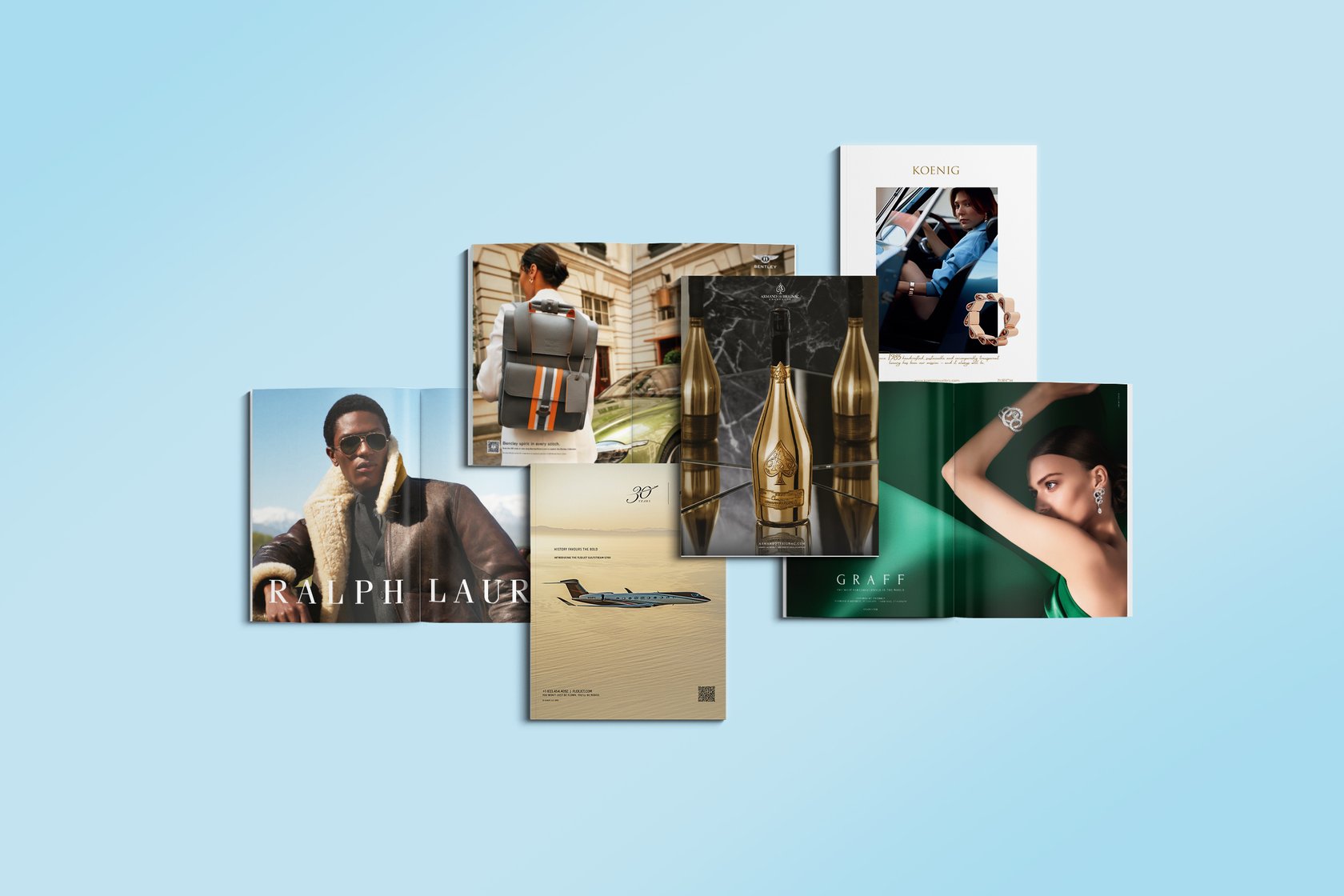
“The strongest luxury magazines are curated commercially as well as editorially,” says Estelle. “It is never just a question of who can pay to be there. It is about who has permission to sit in that world.” On titles such as Bentley Magazine, Badrutt’s Palace Hotel’s Tower Revue and Air Charter Service’s Cloud, the partner opportunity has always needed to feel aligned with the world of the publication, whether that means luxury travel, high jewellery, private aviation, watches, interiors or wider lifestyle partners.
That judgement makes the advertising strategy a form of brand protection. The right partnership can add credibility, atmosphere and value, while a poorly matched one can make the publication feel less exacting, less controlled and less like itself.
For luxury brands, the useful questions are about permission and value: who has the right to appear in this world, what do they bring to the reader, and how does their presence strengthen the experience?
The reader experience should lead
Advertising in a luxury magazine should never feel like an interruption to be endured before the editorial resumes. At its best, it becomes part of the rhythm of the publication: a pause, a shift in pace, an image-led moment or a visual bridge between sections.
“If the commercial thinking is right, the reader should not see the joins,” says Estelle. “They should just feel that the magazine flows, that every page belongs in the same journey, and that the brand is still in control of its own world.”
Dialogue’s experience with Royal Ascot Magazine is a useful reminder of how much reader experience can depend on that judgement. A publication can carry a significant paid presence and still feel elegant, provided the advertising has been treated as part of the issue’s rhythm rather than a set of spaces to be filled.
Creative standards are business standards
In a luxury publication, creative quality is part of the paid proposition. A partner’s presence is judged by who they are, how they appear and whether their page feels at home in the wider world of the magazine.
Some brands instinctively understand this, with advertising that is atmospheric, beautifully art-directed and confident enough to leave space around the idea, while others may need to think differently when entering a luxury owned-media environment, particularly if their usual communications are more tactical, promotional or product-led.
For Estelle, the conversation has to move beyond selling space. “A luxury publication is an environment,” she says. “If a partner wants to be in that environment, their presence has to respect it. The creative, the tone, the restraint – it all matters.”
That can mean thinking about image, tone, storytelling or context. A campaign created for one channel will not automatically work in another, especially when it is being placed inside an owned publication where the parent brand’s standards set the pace.
If the page weakens the publication, it weakens the opportunity. Luxury brands cannot afford to separate creative judgement from business judgement, because the reader experiences them together.
A strategic approach protects the parent brand, the advertiser and the reader, allowing paid partnerships to feel elevated rather than inserted.
Branded content should earn its place
Branded content can give partners a richer role in a luxury magazine, but only when the idea has genuine editorial substance and a clear reason to exist for the reader.
Luxury readers recognise when a page has been shaped around a sales message rather than a story, so the editorial bar has to stay high: the tone, design and angle all need to feel at home in the publication.
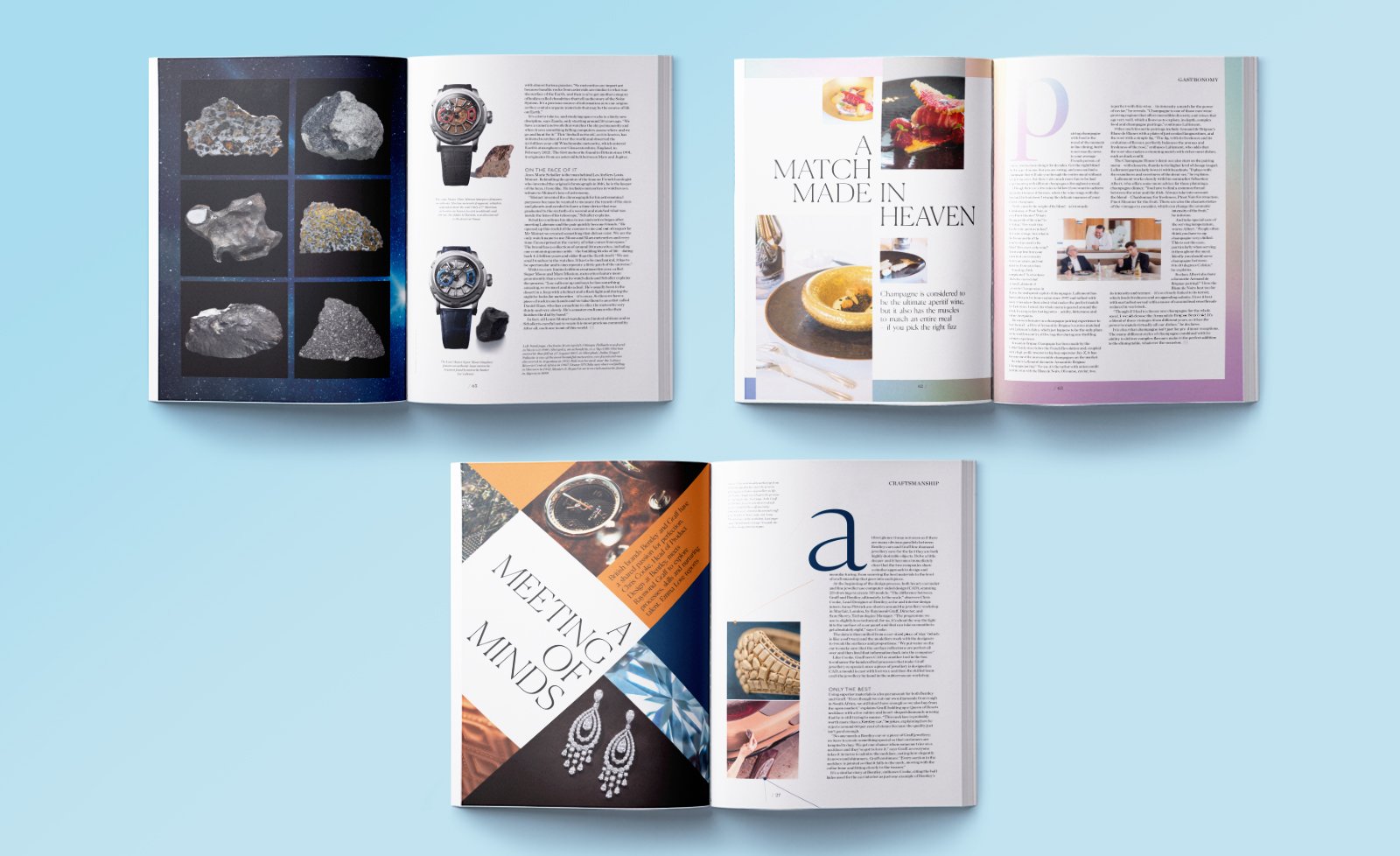
“The strongest branded content gives value to the reader first,” says Estelle. “The partner may open the door to the story, but the story still has to earn its place.” In Dialogue’s work with Bentley Magazine, that has included watchmaking stories with unexpected scientific angles, jewellery features shaped around craft and light, champagne stories that draw on wider category insight, and architectural or design-led pieces that give a partner a more credible editorial role.
Handled well, this creates a more valuable form of partnership: one that gives advertisers access to a premium storytelling environment while giving the publication something genuinely worth reading.
A strong proposition creates partner confidence
Even the strongest luxury brand cannot rely on recognition alone. Print has to make a clear case for attention, investment and association.
That case relies on relevance, access, context and quality of attention as much as audience size. A smaller, more carefully defined readership can be a powerful business asset when the publication offers a credible route into a specific brand world.
“Advertisers have choices,” says Estelle. “They need to understand why this publication, this audience and this environment are worth being part of. Recognition alone is rarely enough.”
The proposition therefore has to express the audience, tone, editorial authority, distribution, production values and nature of the opportunity with the same care as the magazine itself. In luxury print, confidence comes from knowing the partner is joining a carefully held brand world, rather than buying space in isolation.
The strongest strategy protects the whole ecosystem
A luxury magazine revenue strategy has to serve several interests at once. The parent brand needs the publication to feel uncompromised, the advertiser needs a valuable and credible environment, the reader needs an experience that feels seamless and rewarding, and the business needs the model to make financial sense.
Holding those interests together requires editorial sensitivity, partner judgement and a clear understanding of what the publication is there to achieve. Much of that thinking should remain invisible in the finished magazine, but its absence is easy to feel.
Advertising, partnerships and branded content can all create value when they respect the publication’s purpose and the reader’s relationship with the brand.
“Cost recovery will always be part of the conversation,” says Estelle. “But in luxury publishing, the stronger measure is whether the paid activity strengthens the world the brand is trying to build. A luxury magazine is a statement of taste, confidence and intent, and every advertising decision either supports that statement or distracts from it.”
For luxury brands weighing up print, this is the point worth holding on to. “When commercial strategy is handled with the same care as editorial strategy, print can do more commercially while still feeling elegant, editorial and true to the brand,” says Estelle. “That is where the value is – for the brand, the partner and the reader.”
If you're exploring how a publication can create greater commercial value without compromising your brand experience, we’d love to talk. Whether you’re launching a new title or evolving an existing one, Dialogue helps luxury and premium brands build publishing strategies that balance editorial quality with commercial success.


Read more insightful articles
See more from the blog Content
Beyond the click – are we measuring email too narrowly?
 Content
Dialogue shortlisted for 10 International Content Marketing Awards 2026
 Automotive
Tactical gravity: why automotive launches can drift away from strategy
 Content
The guest confidence gap: when discovery isn’t enough
Proud to be a winner of industry awards, recognised as content marketing experts in print and digital media.