-
Content Marketing For
Luxury Audiences >

-
Trusted By
Leading Automotive Brands >

-
Experts In
Travel & Hospitality >

A few years ago, during an editorial meeting for a luxury project, the copy under review felt strong. It told a genuine story with human insight and was quietly compelling. It read as honest and grounded and gave the brand a real sense of credibility. Yet the consensus in the room was to smooth away the specifics for something more polished and on-brand. In the process of refinement, we lost something essential.
That sense of tension still runs through most luxury content. When you strip away authentic detail for brand polish the trust quietly drains away. I learned a clear lesson: credibility lives in the specifics – the small truth that makes people truly believe in the brand.
Authentic, relatable content builds real confidence. In the luxury sector especially, audiences invest not only in a product or service but in a story that reflects their own values and identity. As Felicitas Morhart, Professor of Marketing at HEC Lausanne and founder of the Swiss Center for Luxury Research, writes, “Authenticity represents a cornerstone for luxury branding.” Her research also shows that consumers judge authenticity through factual signals, brand meaning and personal relevance – which helps explain why vague polish so often weakens confidence rather than strengthening it.
Yet even with that understanding, luxury brands still stumble. Not because their audience is hard to reach, but because brands struggle to sustain that confidence beyond the first impression. Early engagement can look promising: awareness is high, messaging is clear and channels are active. Yet, as the customer experience unfolds, engagement fades and customers quietly slip away.
For premium audiences, content does more than generate interest. It helps people assess credibility, understand value and decide whether a brand feels worthy of closer attention. When that content is vague, generic or thin on proof, momentum fades. When it is clear, coherent and grounded, confidence grows.
The confidence gap
This ‘confidence gap’ doesn't usually stem from neglect. It’s more often a sign that people want something more tangible: proof, clarity and reassurance to justify continued trust in the brand is worthwhile. When those signals are missing or inconsistent – say, through fragmented messaging or stories that feel too self-promotional – early interest quickly turns to hesitation, and then disengagement. That caution is broader than luxury alone. Edelman’s 2026 Trust Barometer, a global study of 33,938 respondents across 28 countries, found that 7 in 10 people are now unwilling or hesitant to trust someone whose values, views or background differ from their own. In that context, polished language without substance is not just ineffective; it actively works against belief.
Research by luxury strategist Daniel Langer confirms this pattern in his article ‘Why ultra-wealthy clients break up with luxury brands’, showing that high-end audiences switch off swiftly from storytelling that feels vague or detached. “UHNWIs expect to be the centre of attention when they engage with a luxury brand,” Langer notes. “They buy the anticipation of a positive perception shift by investing in an experience that affirms their status and worth.” When that attention falters, the relationship fractures. “‘I never give any brand a second chance’, is a typical comment.”
Langer goes on to highlight what he calls ‘the storytelling disconnect’, saying:
“Luxury is about emotion and inspiration. When brand storytelling becomes irrelevant or fails to resonate, it signals a rupture between the brand’s values and the client’s aspirations. This misalignment frequently leads to a swift and often irreversible breakup.”
The gap is widening for another reason too. AI has made it easier to produce content that looks like luxury but doesn’t feel like it. Algorithmically optimised copy can replicate the surface markers of premium communication – the measured tone, the aspirational language, the editorial pace – while entirely lacking the lived specificity that makes it credible. That unease reflects a broader collapse in confidence. Edelman’s 2026 Trust Barometer found that just 32% of people globally believe the next generation in their country will be better off than today, reinforcing how fragile confidence has become. Against that backdrop, content that feels synthetic or over-smoothed is more likely to deepen doubt than build trust.
For HNWI audiences who have spent decades training their eye for the genuine article, this polish without provenance is immediately legible as hollow. The confidence gap is no longer just a content strategy problem. It’s also an authenticity infrastructure problem: brands need to demonstrate not just that their story is compelling, but that a human was actually there.
You can read more about 'Storytelling for luxury brands' in our article.
The commercial cost of weak confidence
These trust leaks may feel subtle in the moment, but their impact is commercial. When confidence leaks, revenue follows. Weak signals mean poorer enquiries, slower decisions and wasted spend. While brands invest heavily in image and immersive storytelling, they often underinvest in the quiet decision-support steps – clear next actions, reassurance and service – that move customers from interest to intent. The result is a beautifully executed experience that falls short at the critical moment because customers don’t know what to do next.
Research from multiple studies by InternetRetailing, Radial and others show luxury brands lose up to 40% of high intent traffic through poor handovers and thin decision support, turning interest into vanished opportunities.
Successful journeys balance desire with direction. They make next steps feel natural, considered and clear but never forced or salesy.
A practical confidence audit helps identify where the leak is happening:
- Discovery – Is there a claim only your brand could make?
- Consideration – Does each touchpoint add proof rather than repeat promise?
- Conversion – Is the next step clear, low-friction and tonally consistent?
These aren’t complex diagnostics, but they offer a clear lens for identifying exactly where confidence is leaking and where to focus first.
How to close the gap
The approach that works is rooted in genuine distinction: a clear sense of place, real expertise and lived experience. Authenticity doesn’t come from process checklists; it comes from editorial instinct. Confidence lies in precision, not polish: a clear, assured tone, meaningful details and stories that feel real, not manufactured. This is what we build at Dialogue.
At discovery, content needs to earn belief, not just attention
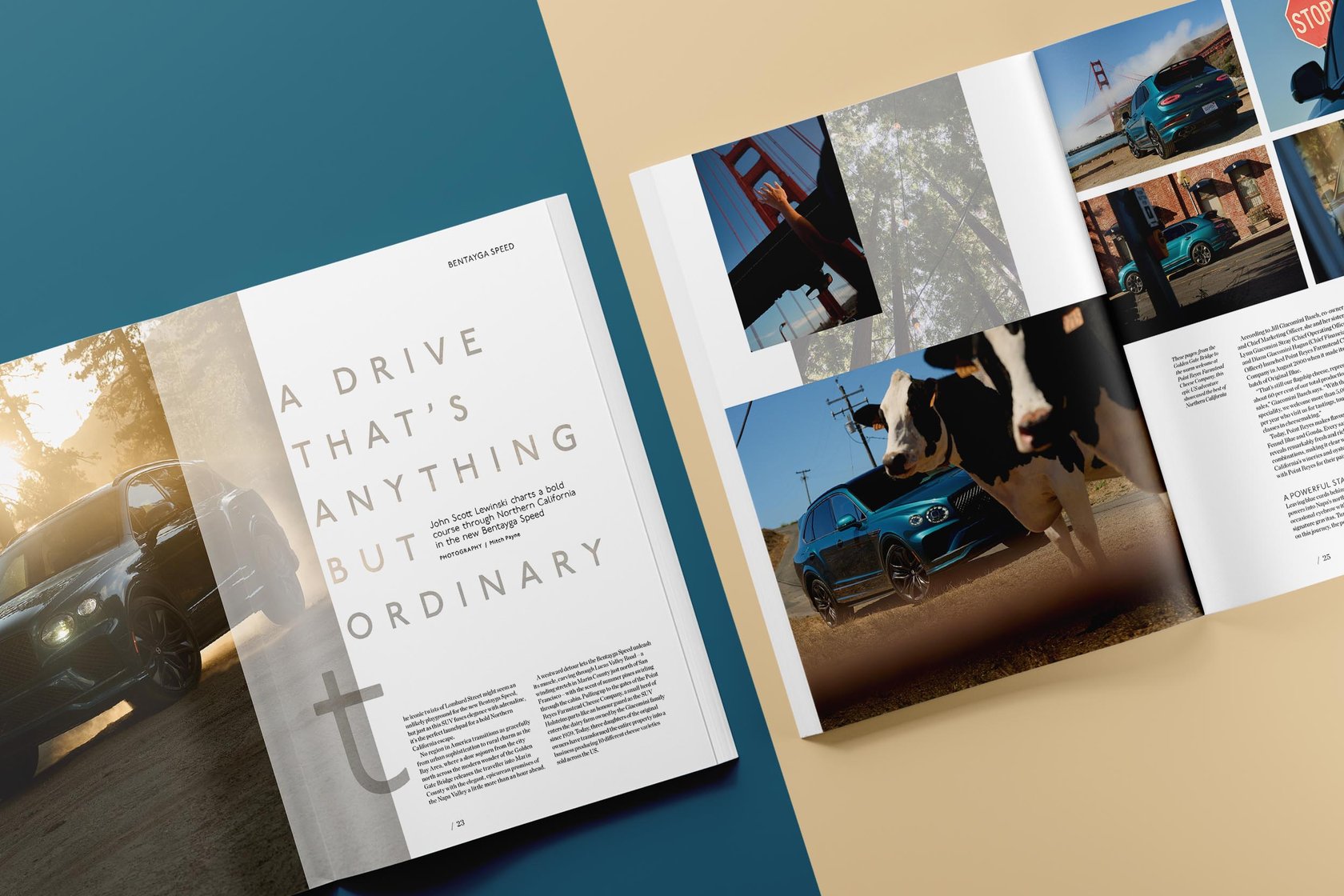
The most effective premium content avoids generic cues and gives readers something specific to hold onto – a setting, a perspective, a lived detail, a voice that feels real. Bentley’s Northern California road trip story worked because it made the car believable through experience, not through polished claims alone.
Bentley Magazine: Lived encounters close discovery gaps
Client: Bentley Motors
Story title: A drive that is anything but ordinary
Discovery challenge: Generic luxury fails to grab high-value readers at first glance
The Bentley Bentayga story illustrates what closing the discovery gap looks like in practice. This story follows a real road trip in a Bentayga Speed through Northern California, with a local writer and photographer commissioned to immerse themselves in the journey. Along the way they meet local characters, including artisan cheesemakers, vintners at a vineyard-art gallery and an owner of a wine bar located in a revived 1930s gas station.
The result is original, genuine storytelling, capturing Napa Valley’s bohemian rhythm and the sensory experience of the Bentayga Speed, from the sports exhaust growl through the hills to the balance of adrenaline and refinement. There are no clichés, just real moments and observations that turn curiosity into conviction for the reader. Bentley appears naturally as an enabler, never as a pitch.
Read more about our work with Bentley.
At consideration, content needs to build proof as well as desire
At this stage, audiences are testing whether the promise stands up. Content should add authority, texture and coherence across touchpoints.
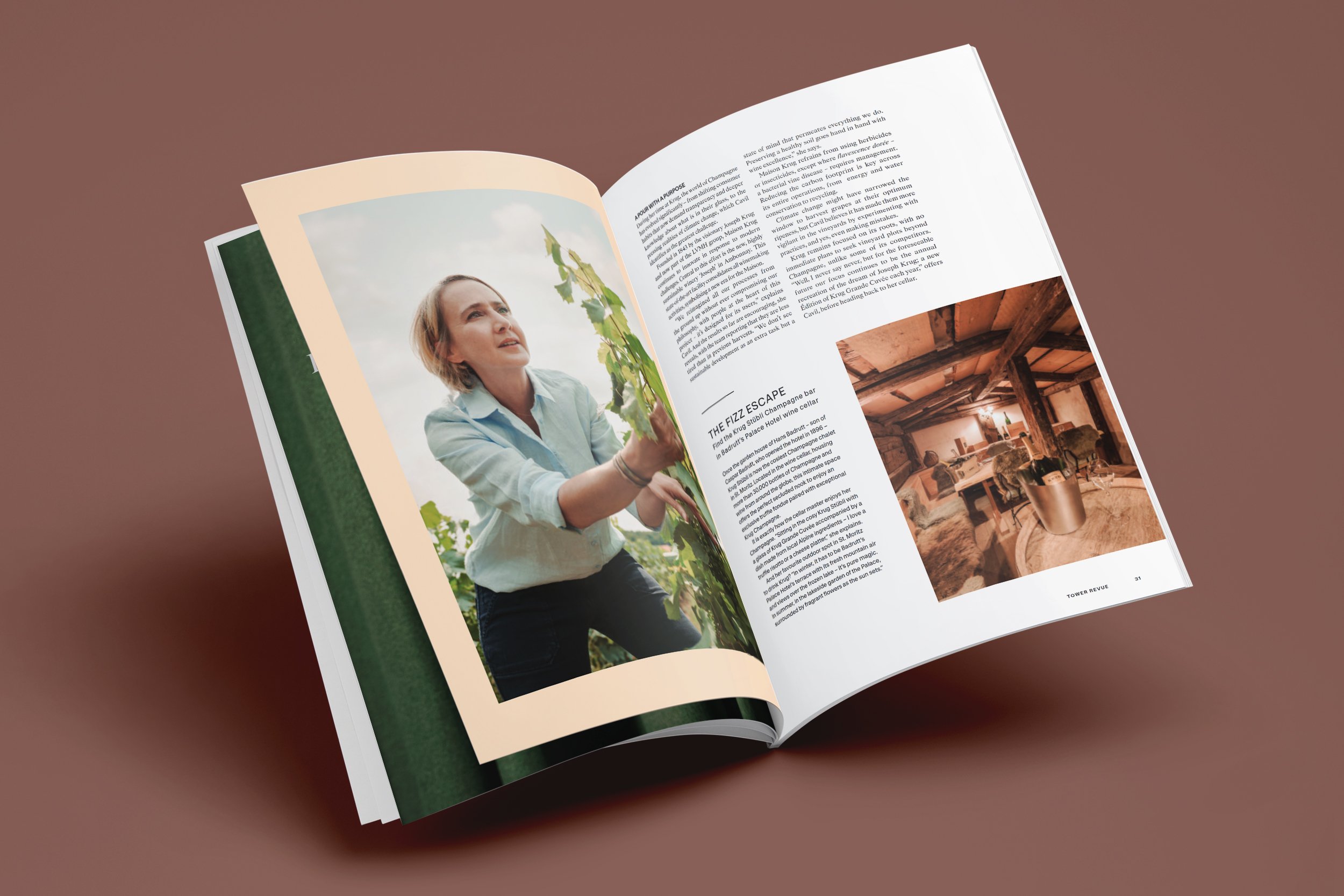
Tower Revue Magazine: how print sustains trust
Client: Badrutt’s Palace Hotel
Story title: Behind the bubbles
Consideration challenge: Inspiration fades without proof – luxury guests need validation that the hotel promise delivers amid competing options.
‘Behind the Bubbles’, a print-exclusive interview with Julie Cavil – the creative force behind Maison Krug, one of the world’s most exclusive Champagne cellars – shows how third-party credibility can shift a reader from inspiration to conviction. Leveraging Badrutt’s Palace’s close relationship with Krug, the piece explores how the hotel curates its cellars and signature pairings, woven together with Julie’s personal anecdotes from her own visits and her recommendations for the best spots in St Moritz to enjoy a glass of Krug Grande Cuvée.
The effect is quietly powerful. Direct-from-source Krug insight positions Badrutt’s Palace as the natural home of Krug in the Engadin – differentiation that few competitors can match. Julie’s voice does something equally important: it humanises the hotel’s promise, grounding alpine elegance in a real person’s genuine experience. Readers move from aspiration to something more solid – a sense that the promise holds up and that trust is well placed.
Read more about our work with Badrutt’s Palace.
At decision, content needs to reduce uncertainty
Premium audiences rarely want hard persuasion. They want clarity, reassurance and language that makes the next step feel natural. Content that answers unspoken questions, maintains tone and supports action can do as much to sustain confidence as the earlier storytelling that sparked interest.
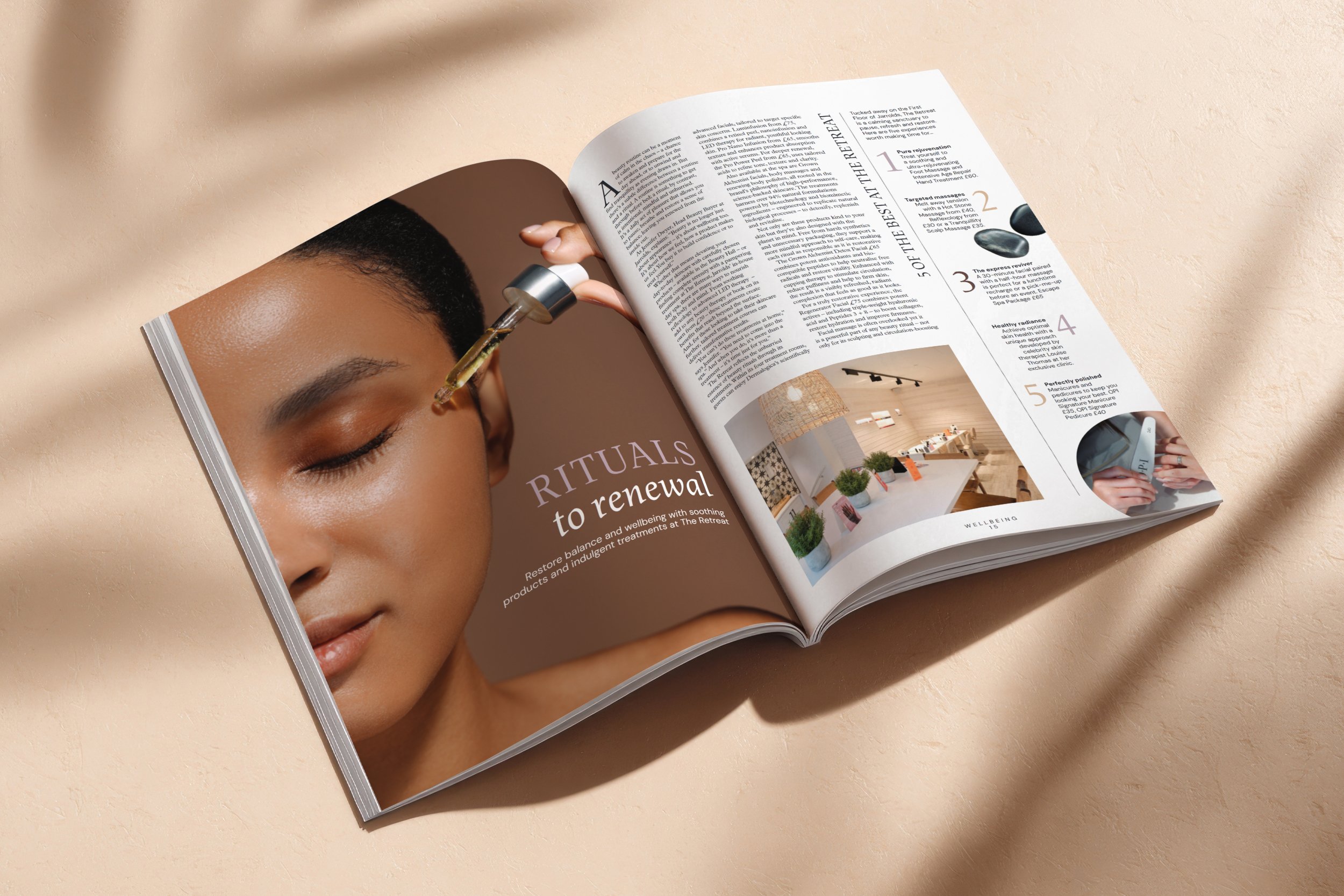
Jarrolds: when editorial leads, retail follows
Client: Jarrolds
Story title: Ritual to Renewal
Decision challenge: Premium local audiences need content that makes the next step feel natural, not transactional.
Jarrolds Magazine illustrates how this works in practice. A feature on skincare and wellness, ‘Ritual to Renewal’, explores the rituals and treatments available in the Jarrolds beauty halls – not as a product list, but as a considered editorial journey through what good self-care looks and feels like.
A box-out, ‘For Men Who Care’, extends the same thinking to male cosmetics available in-store. None of it reads as a catalogue. The tone stays consistent throughout – warm, curious, grounded in place – which means the step from reading to visiting feels like a natural continuation rather than a sales prompt. That’s the quiet confidence premium audiences need at the point of decision.
Read more about our work with Jarrolds.
The detail that matters
That editorial meeting – and the decision to smooth away the detail that made the copy worth reading – is a version of what happens across luxury content every day. The brands that hold their audiences’ trust aren’t necessarily the ones with the biggest budgets or the most channel presence. They’re the ones that never stopped believing the detail mattered.
If that tension sounds familiar, it’s worth mapping where your own journey is losing confidence. We’d be glad to help you find it.

Resources
Authenticity represents a cornerstone for luxury branding – Felicitas Morhart, Luxury Tribune
Global Report – Edelman’s 2026 Trust Barometer
Why ultra-wealthy clients break up with luxury brands – Daniel Langer
Luxury brands lose up to 40% of high intent traffic through poor handovers – InternetRetailing
Related articles

Read more insightful articles
See more from the blog
When every yacht is different, how do you communicate what makes your brand distinctive?

Beyond the click – are we measuring email too narrowly?

Dialogue shortlisted for 10 International Content Marketing Awards 2026

Tactical gravity: why automotive launches can drift away from strategy
Proud to be a winner of industry awards, recognised as content marketing experts in print and digital media.