-
Content Marketing For
Luxury Audiences >

-
Trusted By
Leading Automotive Brands >

-
Experts In
Travel & Hospitality >
Luxury hospitality is experienced through physical details: the weight of a room key, the texture of a menu, the note waiting beside the bed and the care with which a space has been composed. Print belongs naturally in that world because it can make the character of a hotel tangible. At its best, it does more than describe a property or decorate a suite. It gives guests time to enter the hotel’s point of view, understand its relationship with the place and discover the people, ideas and experiences that make it worth choosing.
That makes print a particularly powerful medium for luxury brands, whose value is rarely captured by a list of facilities or a sequence of polished images. A thoughtfully commissioned magazine, pre-arrival guide or book can convey judgement, confidence and generosity in a form guests can hold, revisit and keep. It can shape anticipation before a stay, deepen engagement while a guest is there and preserve the relationship long after departure, giving the brand a tangible presence at different stages of the guest journey.
Its value, however, depends on purpose rather than production alone. Beautiful paper and exacting finishes may invite attention, but they cannot compensate for an indistinct idea, an irrelevant story or careless distribution. The strongest publications begin by defining the audience, the moment and the response they are intended to create, then make every editorial and physical choice serve that role. This is also where cost-effectiveness should be judged: not by comparing the unit price of print with the cost of a digital impression, but by asking whether the publication reaches valuable readers in the right context and produces a depth of understanding, memorability or action that another format would struggle to match.
What print does differently
As we explore in Digital made print luxury, a physical format changes how a story is encountered. Paper, photography and page sequence create pace and emphasis. The opportunity is not simply to occupy more of the audience’s time, but to make that time worthwhile.
The Finnish National Readership Survey 2024 reported an average of 52 minutes spent with a magazine issue, rising to 56 minutes for travel titles; customer magazines averaged 37 minutes. Readers picked up an issue twice on average.
These are market-specific figures for time across an issue, rather than a benchmark for uninterrupted attention, but they demonstrate the scope for sustained engagement with the format.
That attention must be earned. A destination feature can go beyond familiar landmarks; an interview can reveal the judgement behind a service. Original photography, access and a distinctive point of view give readers something they could not get from a generic travel feature.
The test is what remains after the magazine is closed: a sharper sense of the hotel, an experience worth exploring or a reason to return. Consistent design and editorial judgement should connect every story to the brand, rather than leave the reader remembering the destination but not the host.
That clarity also helps guests judge whether the experience is right for them. Showing the people behind a property, the choices that shape its hospitality and its relationship with place gives the promise substance. Our article on the Guest confidence gap explains why that human context matters between discovery and booking.
Give print a role in the guest journey
Format and frequency should follow the publication’s job. An annual magazine needs stories with a long shelf life; a seasonal edition needs a genuine shift in what readers want to discover. A launch or anniversary may justify a one-off book.
Distribution should shape commissioning, not follow it. A prospect receiving a publication through a travel adviser has different needs from a guest finding it in a suite or returning home after a stay. Define the recipient, moment and purpose first. Reach is not the size of the print run; it is the number of relevant readers reached in the right context.
Selected advertising and partnerships can support the economics of a publication and introduce relevant experiences, provided they belong to the hotel’s world and serve the reader. Our article on Commercial print strategy explores how to create that value without compromising the brand experience.
Beyond the magazine
Smaller pieces can serve precise moments in the relationship: a pre-arrival guide helps a guest plan; a personalised letter recognises an existing connection; a post-stay memento keeps an experience present. Content, timing and finish should follow the purpose. Elaborate production cannot rescue an irrelevant message or mistimed arrival.
Brand books
A hospitality brand book is justified when the property has a story a magazine or campaign cannot contain: a distinctive architectural history, archive, craft tradition or relationship with place. It needs original material and an audience that values depth not merely the ambition to produce a beautiful object.
Published with Steidl in 2024, The Book of Birkenstock aligns editorial depth with physical craft. Its account of the company’s origins, fashion influence and German production is carried through selected papers and a debossed cover. The relevant lesson is discipline: subject, audience and production all reinforce a story the brand has authority to tell.
For a hotel, that might mean architectural records, archive photography or the craft traditions that shape the property today. Reporting and imagery can connect this history to the guest experience, creating a book worth revisiting after the stay.

Case studies: print in luxury travel
Badrutt’s Palace Hotel
Produced by Dialogue for Badrutt’s Palace Hotel in St. Moritz, Tower Revue is an annual magazine that deepens guest relationships, celebrates the hotel’s distinctive character and inspires future visits. With a loyal international clientele, the legendary five-star hotel has a rich history to draw on, but its pioneering spirit calls for a publication that looks forwards as well as back. Its distinctive flip-book format gives equal weight to the destination’s two seasons, with winter and summer content presented from opposite ends. While St. Moritz has long been associated with skiing and snow, the summer edition reveals another side of the Engadin, from mountain walks and wildflower trails to high-altitude drives and the pleasures of the hotel’s gardens, pool and terraces. As the Palace develops its summer offering, the magazine helps bring this evolving destination to life for an international readership of discerning, sophisticated and inquisitive travellers.
Balancing insider access with a wider sense of discovery, the magazine combines interviews, some original photography and narrative-led features that reveal the people, places and ideas that make St. Moritz distinctive. Stories range from interviews with world-renowned DJs who make the Palace their home to encounters with the region’s wildlife, explorations of its vibrant art scene and insights into the trusted producers whose ingredients and craftsmanship shape the hotel’s dining experience. Elsewhere, writers uncover the thinking behind the Palace’s architectural transformations or take readers into the surrounding landscape, revealing new ways to experience the Engadin. Dialogue develops the content in close collaboration with the hotel, from the initial selection of ideas through to commissioning, commercialisation, design, production and distribution. Working with influential hospitality and travel writers who know the Palace first-hand brings depth and authenticity to the storytelling.
Distributed throughout the hotel’s rooms and suites, through selected partners such as Swissair and other 5-star hotels and delivered to the homes of regular guests, Tower Revue extends the relationship beyond the stay itself. Guests regularly tell the hotel how much they value the magazine, and even those who have visited only once or twice often request a copy. Such responses speak to the value of print: by offering thoughtful, engaging editorial rather than straightforward promotion, the magazine gives readers something to return to, keeping the Palace and its destination close to mind between visits.
Air Charter Service
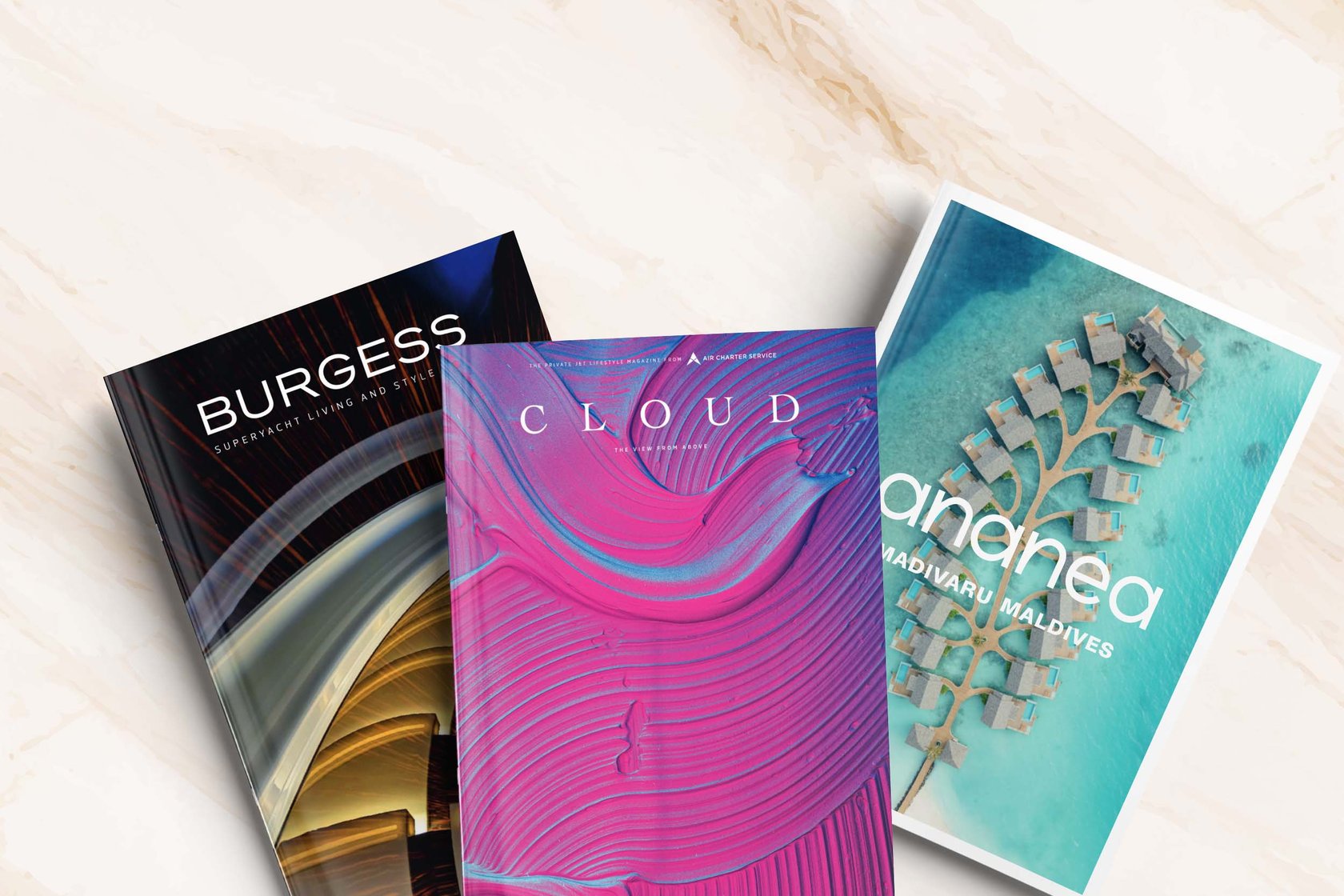
Created by Dialogue for Air Charter Service (ACS), Cloud is an annual magazine designed to strengthen relationships with existing clients, reinforce brand loyalty and enrich the experience of travelling with the company. Distributed directly to VIP homes, on board ACS aircraft and in exclusive lounges worldwide, it also reaches clients at events where ACS operates, including the Cheltenham Festival. Its editorial approach reflects the interests of an internationally minded, culturally curious readership, combining an intelligent perspective on the wider world with compelling stories about the people, ideas and experiences that shape it. Features have explored subjects as varied as the craft of luxury piano-making and Paris through the eyes of the head of the Michelin Guide. The aim is to create a publication that readers value for its own sake: informed, inspiring and surprising, with a sense of discovery that reflects ACS’s understanding of its audience.
Dialogue oversees the magazine from initial concept and editorial planning through commissioning, design, production and distribution, working closely with ACS to develop story proposals for selection and approval. Dialogue also commercialises the publication, with careful attention paid to matching suitable brands and appealing to the UHNWI audience. The Perspectives section demonstrates how we work together particularly effectively. Each feature begins with an engaging editorial story, before an ACS spokesperson offers practical insight into how to experience the subject for themselves, whether that's how to get there, what to see or where to stay. This approach puts the reader’s interests first while giving ACS a natural role as an informed, well-connected travel partner. The magazine’s impact can be seen in the way it continues to feature in ACS’s social posts from around the world, as well as in individual reader responses. On one occasion, an ACS client and CEO contacted the team after receiving the magazine to ask about cover artwork and how he might purchase the original. It’s a small but telling example of how thoughtful editorial and visual storytelling can capture attention, create conversation and keep a brand present in its clients’ lives beyond the journey itself.
Fraser
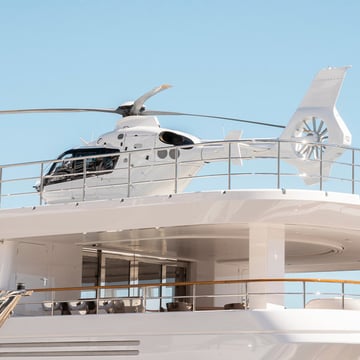
Fraser’s annual magazine, created with Dialogue, combined yacht showcases, destination guides and lifestyle features to introduce readers to superyacht charter. The aim was to help prospective clients picture their own trip and encourage bookings. Stories covered family celebrations, coastal destinations and time to relax, while a yacht directory and recommendations from Fraser’s brokers helped readers take the next step towards planning a charter.
The lifestyle features focused on what guests could do on board and ashore. Stories explored how facilities such as DJ booths, open-air cinemas and beach clubs were used for celebrations, and how chefs created bespoke menus for special occasions. First-hand accounts showed how charters became family traditions, including Thanksgiving dinners at sea. Fraser’s brokers added practical destination advice, from favourite tavernas to secluded coves and snorkelling spots.
Dialogue worked closely with Fraser on the editorial plan, drawing on its brokers, charter specialists, yachts and crews to develop stories for prospective clients. We managed commissioning, editing, design, print production and commercialisation, bringing together writers with personal experience of superyacht charter and Fraser’s in-house expertise. The result was a magazine that combined travel inspiration with practical information to support the charter-planning process.
From inspiration to action
Print can also support a direct response when audience, content and timing align. A case study published by Print Power reported a 35:1 return on advertising spend for a Mr & Mrs Smith campaign. Customer analysis shaped an eight-page newspaper-format mailing for active and lapsed customers. This was targeted direct mail, not a magazine study, but offers a relevant luxury-travel example of print planned around a commercial objective.
A hotel magazine also needs a credible route from interest to action. A destination feature might lead to an online itinerary, a chef profile to a dining experience, or a seasonal story to an enquiry page. Dedicated links or QR codes can make that progression measurable without disrupting the editorial experience.
Measure the publication against its intended role. Reader feedback can show which stories are valued and revisited; tracked enquiries and bookings can show response. But brand understanding requires separate evaluation, and incremental revenue needs a comparison that distinguishes additional business from purchases likely to have happened anyway.
Print and sustainability
Environmental responsibility belongs in the brief, not in a note added before production. Quantity, paper sourcing, finishes, packaging and distribution all matter. Work with production partners to assess the finished publication’s sourcing and recyclability rather than treating one material choice as proof of overall performance.
Longevity is valuable, but it does not automatically mean lower impact. The practical priorities are relevance, appropriate quantities and distribution that avoids unwanted copies. Read more about our approach to sustainable print.
Print and digital working together
Luxury travel and hospitality marketing depends on deepening the relationship with guests. Print offers physical presence, sensory engagement and room for stories to resonate. Digital keeps practical information current, extends those stories and makes the next step easy. Used together, they can connect discovery, anticipation, the stay and what follows.
Print is most valuable when it has a defined role in the wider marketing system. Audience, editorial strategy and distribution should be set together, then connected to digital channels that extend the story and measure response. The question is not whether a publication will impress, but what it will help the right reader understand, anticipate or remember.
If print could strengthen your guest journey, start with three decisions: the audience, the moment and the job. At Dialogue, we combine audience insight, editorial judgement and design to turn that brief into stories worth reading and publications worth keeping. Contact us to explore the role print could play in your hospitality marketing strategy.

Resources
Magazine reading times and repeat reading – Finnish National Readership Survey 2024
The Book of Birkenstock – Steidl, 2024
Mr & Mrs Smith achieve impressive advertising return and Award – Print Power, February 2024

Read more insightful articles
See more from the blog
The power of print in luxury hospitality marketing
When every yacht is different, how do you communicate what makes your brand distinctive?
Beyond the click – are we measuring email too narrowly?
Dialogue shortlisted for 10 International Content Marketing Awards 2026
Proud to be a winner of industry awards, recognised as content marketing experts in print and digital media.