-
DOWNLOAD
Your Content Marketing Checklist >

-
REQUEST TODAY
A Content Consultation >

Across the UK, brands are encountering a familiar pressure: people still spend hours with content each day, but the focus they bring to it hasn’t kept pace. A recent study by McKinsey titled ‘Mind the attention gap: Winning the battle for UK consumer attention’ showed that although media consumption remains high, attention has plateaued while content supply continues to surge – a gap made wider by audiences now flitting between formats, feeds and devices.
For regional organisations in particular, this problem is even more pronounced. Unlike national brands with large paid budgets and always on reach, regional businesses rely far more on being consistently visible within a limited geographic market. But with UK audiences now spreading their attention across more channels and devices – digital media alone accounts for 65% of total media time, and user generated content has risen to 27% – staying front of mind locally becomes harder without a cohesive content presence. And because overall UK media attention has flattened out, even as content supply keeps climbing, regional brands can’t rely on occasional campaigns to cut through; they need content that repeatedly earns attention, builds familiarity and keeps them in consideration between key moments.
When something earns real focus, the impact is clear. Long form storytelling, for example, continues to outperform short, passive formats because it captures what researchers call ‘high quality attention’: the kind driven by genuine engagement rather than fleeting impressions. That’s why the organisations making headway today tend to treat content less like a series of campaigns and more like an ecosystem – something consistent enough to build recognition, trust and return visits over time.
Dialogue has spent more than three decades helping global and regional organisations connect with audiences through content ecosystems. We have been in Norwich for nearly 40 years, but like many other businesses based here work has extended far outside of this region. Our scope crosses sectors including retail, events, automotive, tourism and hospitality for brands such as Bentley Motors, Badrutt’s Palace Hotel, Harley-Davidson and Jarrolds. Our global reach is rooted in Norwich’s strength as a creative city: Norwich is part of UNESCO’s Creative Cities Network as a UNESCO City of Literature and is recognised as home to a cluster of digital creative businesses, including marketing, publishing and even video game design. With the University of East Anglia and Norwich University of the Arts helping to sustain a pipeline of creative and digital talent, we’re proud to be part of (and contribute to) this regional creative and marketing ecosystem.
The eastern region of the UK is home to international brands such as Lotus Cars, as well as local stalwarts like the award-winning independent retailer Jarrolds. We are proud to have partnered with both brands, as well as Revival Productions – the company behind the incredible Classic Ibiza events – and East of England Co-op, a regional retailer with heart.
The common thread across all those organisations is audience. Whether you are selling tickets, rooms, cars, memberships or experiences, growth depends on people noticing you, trusting you and coming back. That is why we talk about content as an ecosystem. It is a way of building attention and familiarity over time, across the channels your audience actually uses, rather than relying on one campaign to do all the heavy lifting.
Great content begins with editorial thinking
Dialogue’s roots lie in magazine production and print remains central to our approach. Print teaches disciplines that still matter across modern content marketing: understanding audience interests, shaping stories clearly and maintaining quality with consistency.
But we all know that the platforms where people seek content have now changed, with the proliferation of websites, social media, search and now AI. Our skills as a content agency have evolved to match – but thankfully the principles of effective and engaging content remain the same, regardless of print or digital platform.
Strong content strategy still depends on familiar editorial questions: who is this for, why should they care, and what is worth saying? Strip out the filler and those questions become even more important.
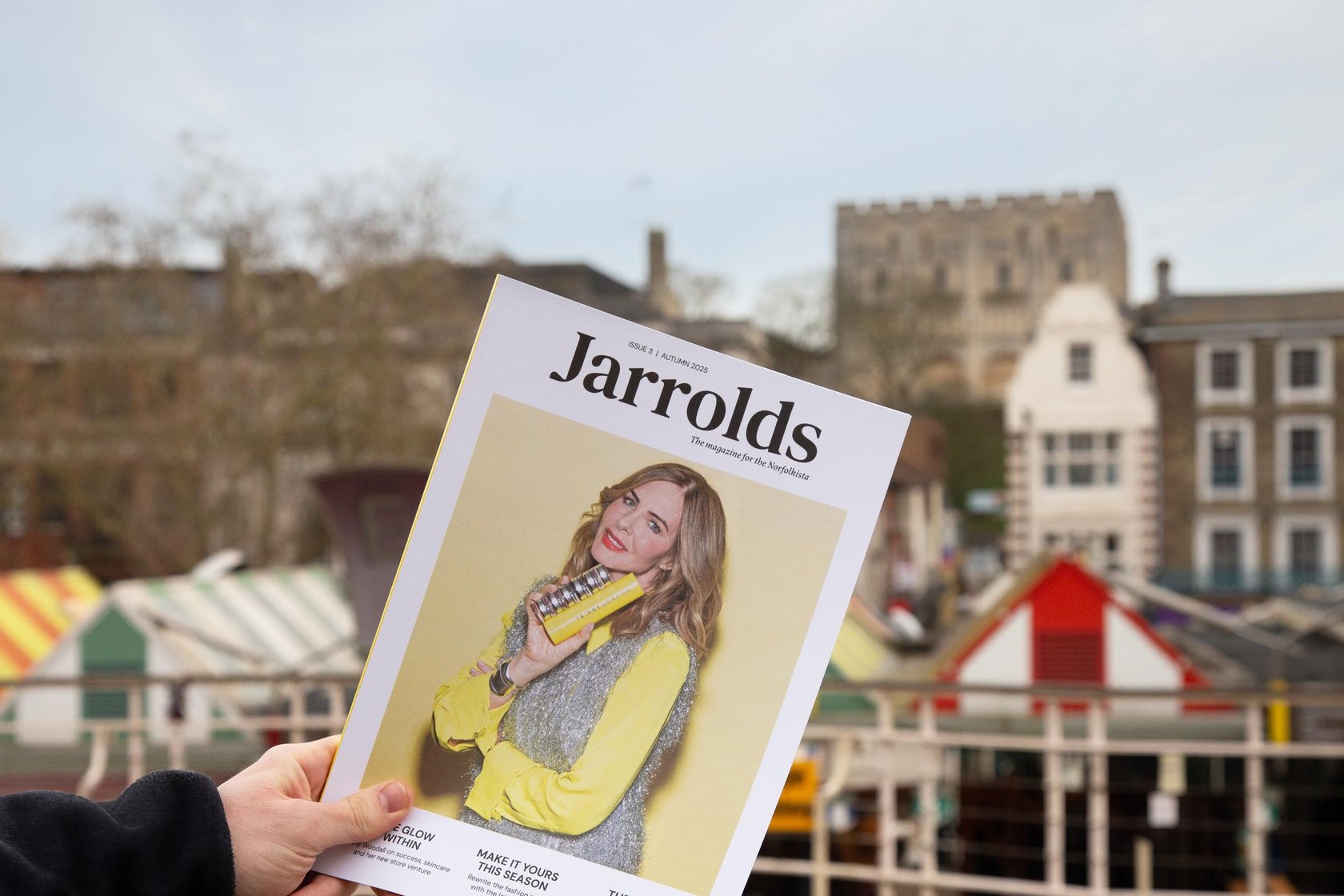
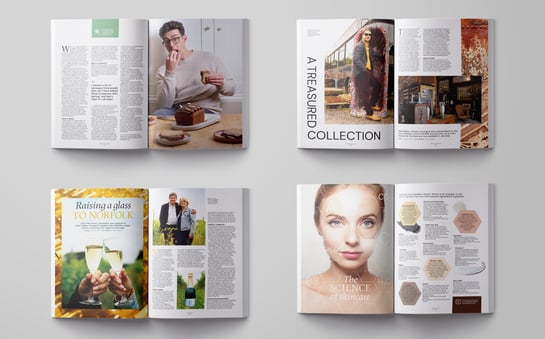
Jarrolds magazine is a strong example of editorial thinking delivering commercial value. Jarrolds, Norwich’s flagship independent department store, needed a print magazine that could support its rebrand while staying true to its identity. The challenge was to create something that felt premium, relevant and distinctly regional, without losing the commercial role it needed to play.
Dialogue planned, commissioned, wrote and designed a magazine that mirrored the customer journey through the store. Content ranged from beauty and interiors to local food and drink, while also bringing Jarrolds’ in-house expertise to the forefront. The result was a hard working marketing asset. As Jarrolds puts it:
“The magazine has proved to be an essential tool for publicising and cementing our rebrand in the minds of our consumers… Jarrolds magazine ensures we stay culturally relevant to consumers of today in the context of our East Anglian setting.”
Content to create momentum
The strongest content strategies are built as connected systems across social, editorial, video, events and digital channels. This ensures audiences encounter a consistent story in different places.
Classic Ibiza is a strong example. Dialogue began working with Revival Productions in 2016 when the concert series launched and needed to build an engaged audience. Social media sat within a wider strategy that also included PR, advertising, video and promotion through local media. That mattered because social did not work in isolation – it worked as part of a joined-up content model.
Facebook, supported by Instagram and Twitter, quickly became the strongest channel for reach, engagement and website traffic. Over the following years, Dialogue used tailored content and carefully managed paid activity to help launch new venues, grow awareness in new locations and keep existing audiences engaged without becoming overly sales-led. Because tickets could go on sale nearly a year in advance, the content had to sustain anticipation and give people a reason to stay involved.
This considered strategy helped Classic Ibiza grow from a single event in Norfolk into a recognised brand across multiple venues in the Midlands and South of England, with Facebook growing to more than 20,000 followers. Social media consistently ranked among the top ways audiences said they heard about the concerts, and ticket sales regularly exceeded targets. That long-term approach mattered even more in 2020. When the events industry was disrupted by Covid, Dialogue adapted the strategy to keep audiences informed and engaged through performance videos, live DJ sets and timely event updates. It is a good reminder that a content ecosystem supports the relationship, not just the sale.

Heritage and expertise through storytelling
Some brands have a rich history, specialist knowledge or a deeply loyal following. On paper, that sounds like an advantage but in reality, it creates pressure. Heritage can feel static and old fashioned if the story is not told well, whereas expertise can become inaccessible and too technical. At the same time passionate audiences can be unforgiving when the story feels generic.
Lotus Cars is a good example of content bringing heritage to life effectively.
When Lotus wanted to mark both the 50th anniversary of its home at Hethel in Norfolk and the 70th anniversary of the marque, Dialogue was asked to create two premium print titles for enthusiasts and admirers around the world. The brief was rich, from motorsport achievement and engineering innovation to iconic design and fan culture. But the risk was obvious too: overload, or content that slips into cliché.
The answer was editorial curation, with standards to match the brand. Dialogue worked closely with Lotus to shape, commission, design and deliver publications that highlighted the marque’s history with clarity and impact. The editorial drew on interviews and insights from expert employees, supporters and the son of founder Colin Chapman. The design used decades of striking photography to create something collectible and the advertising was selected carefully to align with the ethos of excellence associated with the marque.
For specialist brands, the bar is high. People already arrive with knowledge, opinions and strong expectations and they can spot generic storytelling a mile off. The work is to treat that audience with respect, bring genuine detail to the surface and still leave them with something fresh to think about. It takes control of tone, careful editing, and the confidence to let depth carry the story.

Multi-channel content
Audiences do not experience brands through a single channel; they move between touchpoints, often quickly. So, the strategic question is how each channel supports the wider relationship.
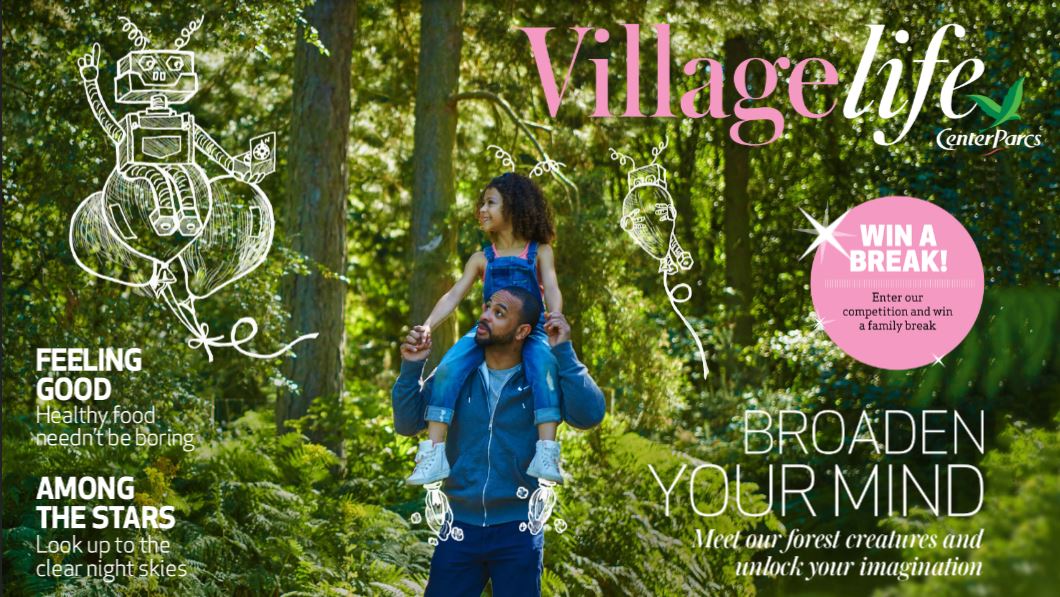
Center Parcs understood that early. In 2004, the brand asked Dialogue to produce its customer magazine, Village Life. The audience already knew the brand, so the task was not just awareness, it was to deepen connection, reinforce the values of family togetherness and escape, and encourage repeat bookings.
That meant content with emotional as well as commercial value. Editorial and design were shaped to reflect the wider Center Parcs experience, using storytelling to bring the brand’s values to life. Thanks to Dialogue’s location close to Center Parcs’ Elveden Forest site, understanding the brand and the audience was refreshingly practical. On-site visits helped us gather photography, anecdotes and interviews with staff and guests, capturing the small details that make the experience feel real, from cycling around the forest to filming activity sessions on site.
The strategy did not stop at print. Dialogue also launched a digital edition of Village Life, promoted through Center Parcs’ e-newsletters, website and social channels, with extra content across desktop and mobile, including film. The result was a more flexible content experience that could meet audiences in different places and at different moments.
It also performed strongly. The magazine was distributed to 300,000 regular visitors and, over the course of a year from September 2016, Center Parcs saw a 139% increase in bookings from those who received the print edition of Village Life. Survey responses for the digital edition were also positive, with 97% saying it was easy to navigate, 89% finding the content interesting and 84% describing it as engaging.
This example shows that print and digital do not need to compete. Used well, they strengthen each other.
Regional brand ecosystems
The East of England is home to a remarkably varied mix of organisations that depend on audience engagement and reputation: brands that need to inspire visits, build trust over time, or keep members, guests, customers or communities engaged across long cycles. There are different sectors, certainly, but they all have similar strategic pressures: attract attention, maintain relevance, build loyalty and keep the relationship alive between transactions, visits or key moments.
Working closely with organisations across that landscape encourages sharper audience reading and it teaches you that place, culture and community are not just decorative extras, they are often the material that makes the story resonate.
Finding a content partner that fits
Choosing a content partner is a bigger decision than it looks on paper, especially if you want content that keeps working long after launch day. The quickest way to sense whether a partner is right is to listen to how they talk about your audience. Do they ask smart questions, show good judgement and care about the details, or do they rush straight to outputs?
A few practical things tend to matter most:
- Editorial craft, so the work reads well, feels considered and earns trust
- Strategic thinking across channels, so each touchpoint has a clear job to do
- A track record of building joined-up content ecosystems, not one-off campaigns
- Operational discipline, so quality stays high even when the pace picks up
And then there is consistency. It comes from lots of small decisions made well, week after week. When the tone is right, the judgement is sound and the strategic intent stays clear, the brand starts to feel dependable.
If you are weighing up options, those points are a useful checklist. They also signal something less tangible, but just as important: whether a partner will protect your brand standards while still helping you move at the speed the business needs.
Content builds the brands that last
Platforms and content formats will forever evolve, and audience habits will keep changing too. What does not change is the value of meaningful storytelling, consistent audience engagement and content strategy built for the long term rather than the next reporting period.
That is the real lesson from more than 30 years of content marketing. The goal is not volume: it is building stronger relationships, so people learn what kind of brand they are dealing with, feel understood and have a reason to return.
Done well, content builds familiarity, trust and preference. Sometimes you see it in the metrics straight away. Often it shows up later, in the brands people choose without overthinking.
If you are a regional organisation thinking more seriously about how content could help grow your audience, strengthen your reputation and create longer-lasting relationships, get in touch.

Resources
Mind the attention gap: Winning the battle for UK consumer attention - McKinsey & Company

Read more insightful articles
See more from the blog Content
The guest confidence gap: when discovery isn’t enough
 Automotive
The commercial print strategy luxury brands often overlook
 Automotive
From brief to cover story: inside a Bentley Magazine feature
 Print
Print
The content confidence gap that costs luxury brands customers
Proud to be a winner of industry awards, recognised as content marketing experts in print and digital media.