-
Content Marketing For
Luxury Audiences >

-
Trusted By
Leading Automotive Brands >

-
Experts In
Travel & Hospitality >

The luxury car sector is good at launch content. It knows how to produce the beautiful film, the emotional reveal, the shot of the car gliding through an impossible mountain pass while a family, a founder or a future-facing urban professional looks quietly transformed. It knows how to create content that builds brand desirability. It also knows how to produce sales-drive messaging once the commercial machine kicks in.
Where it still falls short is in the content that sits between those two modes. Brand storytelling sits over here, sales activation sits over there, and the middle – the nurture content that helps buyers move from interest to confidence – is often missing.
That gap matters because cars are not bought like low-value impulse items. This is not a can of Coke. A premium or luxury vehicle is rarely bought on the strength of one campaign asset, one social post or one showroom visit. The decision is researched, discussed, deferred, justified, revisited and compared from multiple angles over time. Which means content has to do more than create a launch moment. It has to answer questions, reinforce value, reduce hesitation and help buyers keep moving.
Buyers do not arrive empty-headed and fresh to the proposition. Instead, they come carrying assumptions, questions, half-formed concerns and information gathered from friends, search, social, dealers and third-party sites. So, the role of content is not just to announce the car. It is to support the decision-making process that follows, across all the places buyers go looking for reassurance.
Cox Automotive’s latest buyer journey study underlines just how fragmented that path is. Nearly two-thirds of buyers said their ideal experience combines online and offline touchpoints, while third-party websites remained the top destination for vehicle buyers at 75%, ahead of dealership sites and far ahead of automaker websites. Buyers visited an average of 4.6 sites during the process.
The journey is not brand-owned.
63% of buyers want an omnichannel process, third-party sites remain the top destination at 75% and buyers visit an average of 4.6 sites during the journey.
The industry is still too focused on the wrong moments
Too much automotive content still behaves as if it exists either to create the initial spark or to close the deal. That leaves a dangerous gap between desire and decision.
In premium automotive, that gap is where hesitation grows. It is where myths need busting, practical concerns need addressing, values need validating and brand promises need proving. If a brand does not do that work, somebody else will. The buyer will go elsewhere for the answer, and the brand loses control of the narrative at the exact moment control matters most.
That’s why content in premium automotive has to do more than keep the brand visible, it also has to help buyers live with the decision before they make it. That means answering questions, reinforcing value, reducing uncertainty and keeping the buyer moving when the journey becomes slower, messier or more emotionally complex than the campaign plan assumes.
What buyers are really trying to solve
For some buyers, the answer is practical. For others, it is emotional. For others again, it is about values, identity or status.
The decision is rarely just about transport
Sometimes the problem is speed, safety, size or fuel economy. Sometimes it is style, status, craftsmanship or the feeling of being treated as someone special. Sometimes it is not even really about transport. In the higher reaches of the market, the purchase may be about individuality, connoisseurship, identity or the pleasure of owning something made with obsessive care. That is not motor transport. It is something closer to a collection, an art piece or a statement about self.
That is where a lot of content still remains too shallow. Automotive marketers often assume that because the emotional proposition is clear in campaign work, the rest of the journey will look after itself. It will not.
A brilliant TV ad about safety, family, heritage or future-facing technology is only the trailer. It is the promise of the Hollywood ending. The buyer then immediately moves to a different question: how?
From promise to proof
How does the technology work? How does the safety system behave in the real world? How does this fit family life? How does this make EV ownership easier? How does this brand justify the premium? How does the experience differ from the badge next door? Consideration-stage content should answer that second question with patience and depth, not just repeat the promise more loudly.
For premium brands, that means building content around the real pillars buyers use to evaluate value over time:
- safety
- performance
- sustainability
- technology
- ownership experience
- resale confidence
- design
- craftsmanship
These pillars aren’t new. What is new is that buyers expect to move through them in a non-linear way and to do so across multiple channels. They may come into a model page through a social post about design, then care more about charging costs, then go to a forum for proof, then return through a retailer email because a finance option changed. The brand that still treats content as a neat funnel stage is not responding to how people actually buy.
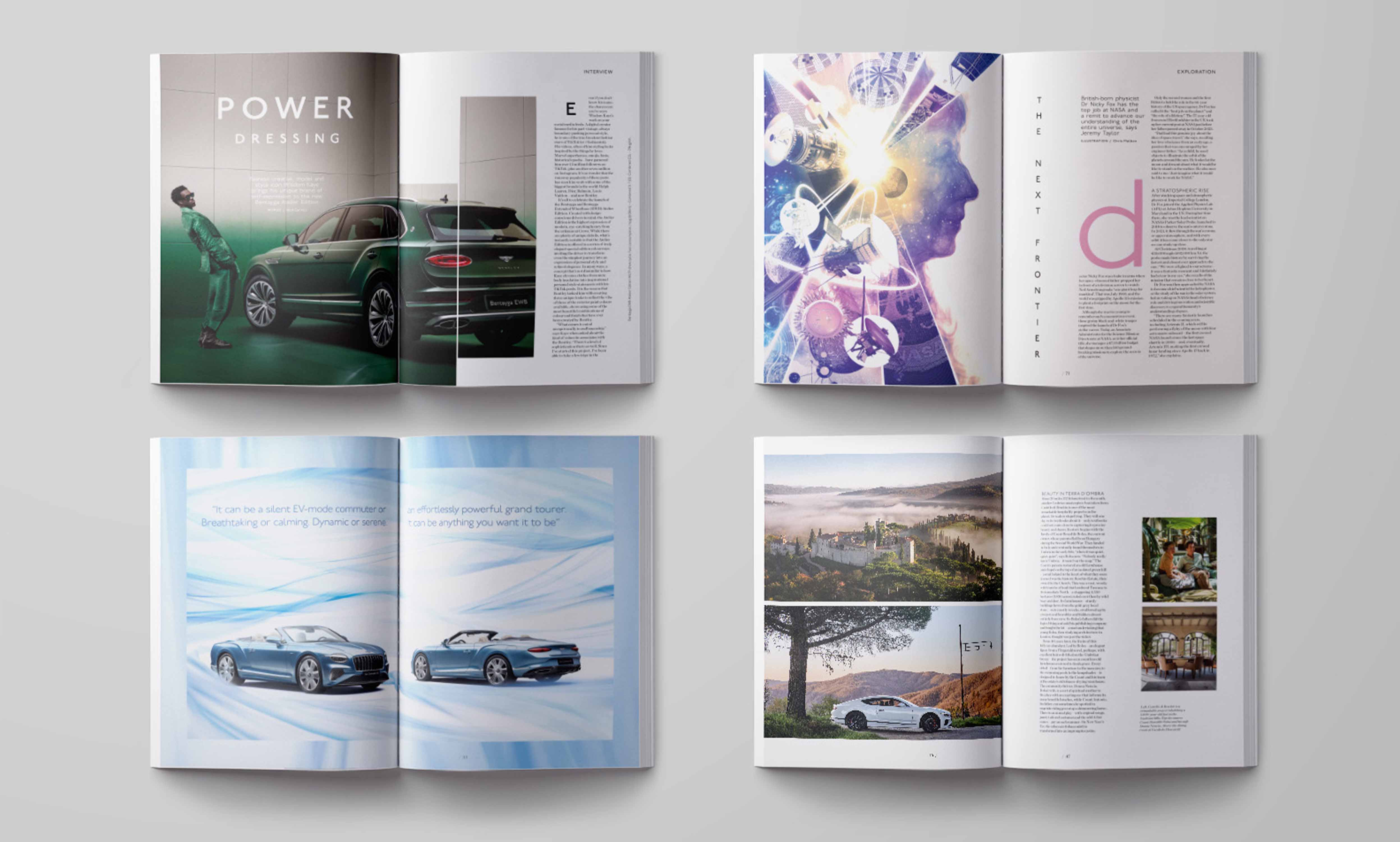
Bentley Magazine – content that sells the world, not just the car.
Dialogue helped Bentley turn its magazine into a modern luxury content platform designed to engage both loyal owners and prospective buyers. By combining Bentley product stories with broader luxury lifestyle editorial, the publication did more than reinforce brand positioning – it gave audiences more reasons to stay in Bentley’s world between purchase moments. The magazine also attracted new advertisers aligned with the brand’s values, strengthening commercial performance and demonstrating how premium content can support both long-term brand equity and nearer-term business value.
Find out more about Bentley Magazine.
EV content exposes the weakness most clearly
EVs make this failure especially obvious.
The electric vehicle market has made this shift impossible to ignore. In an EV journey, buyers are not simply considering a different product, they’re often considering a different pattern of life.
Home charging, route planning, running costs, battery confidence, public infrastructure and long-distance practicality all become part of the decision. That changes the role of content; it is no longer enough to celebrate innovation and just assume the buyer will join the dots for themselves. The content has to reassure.
McKinsey found that among prospective European EV buyers, the biggest concerns are purchase price, battery range and battery lifetime, with electricity prices and public charging availability also among the top issues. And these anxieties are central to adoption.
This is why EV content is such a useful test of maturity. The question is not whether a brand can make electric mobility look desirable, it’s whether it has built enough useful, confidence-building content to make the buyer believe they can actually live with the product.
In other words, content has to move from romance to resolution, answering not just why this car is desirable, but why this decision is workable.
EV consideration is an information problem.
Prospective European EV buyers are most concerned about purchase price, battery range and battery lifetime. Electricity prices and charging availability are also significant barriers.
Trust and reassurance are not soft outcomes
This is where trust and reassurance deserve more weight in the commercial conversation. They are too often treated as soft outcomes, but actually, they’re what allow a high-value prospect to keep moving.
Cox Automotive’s 2025 research on shopper satisfaction is unusually useful here because it names the drivers plainly: transparency and clear communication, feeling well-informed, knowledgeable and supportive staff, and a sense of control. Cox says these drivers create trust, reduce friction and give buyers confidence. That is not branding fluff, it’s purchase progression.
Confidence is commercially relevant.
Transparency, being well-informed, supportive staff and a sense of control are the key drivers that create trust, reduce friction and give buyers confidence.
The implication is uncomfortable for a lot of marketers because it means content has to do more than look premium. It has to behave usefully, helping people take their time, digest information and feel less exposed.
The real competitor is often inertia
That is especially important in a category where the journey is long and the stakes are high. Buyers can sit in a holding pattern for months. The first spark wears off. A delivery date stretches. Another brand appears. A spouse raises a doubt. The economy turns. An article about charging infrastructure gets shared in the group chat.
The real competitor is often not another marque at all. It is doing nothing. It is delay. It is inertia. It is the prospect deciding to hold off for another quarter or another year. That is why content becomes more valuable, not less, after the hand-raise.

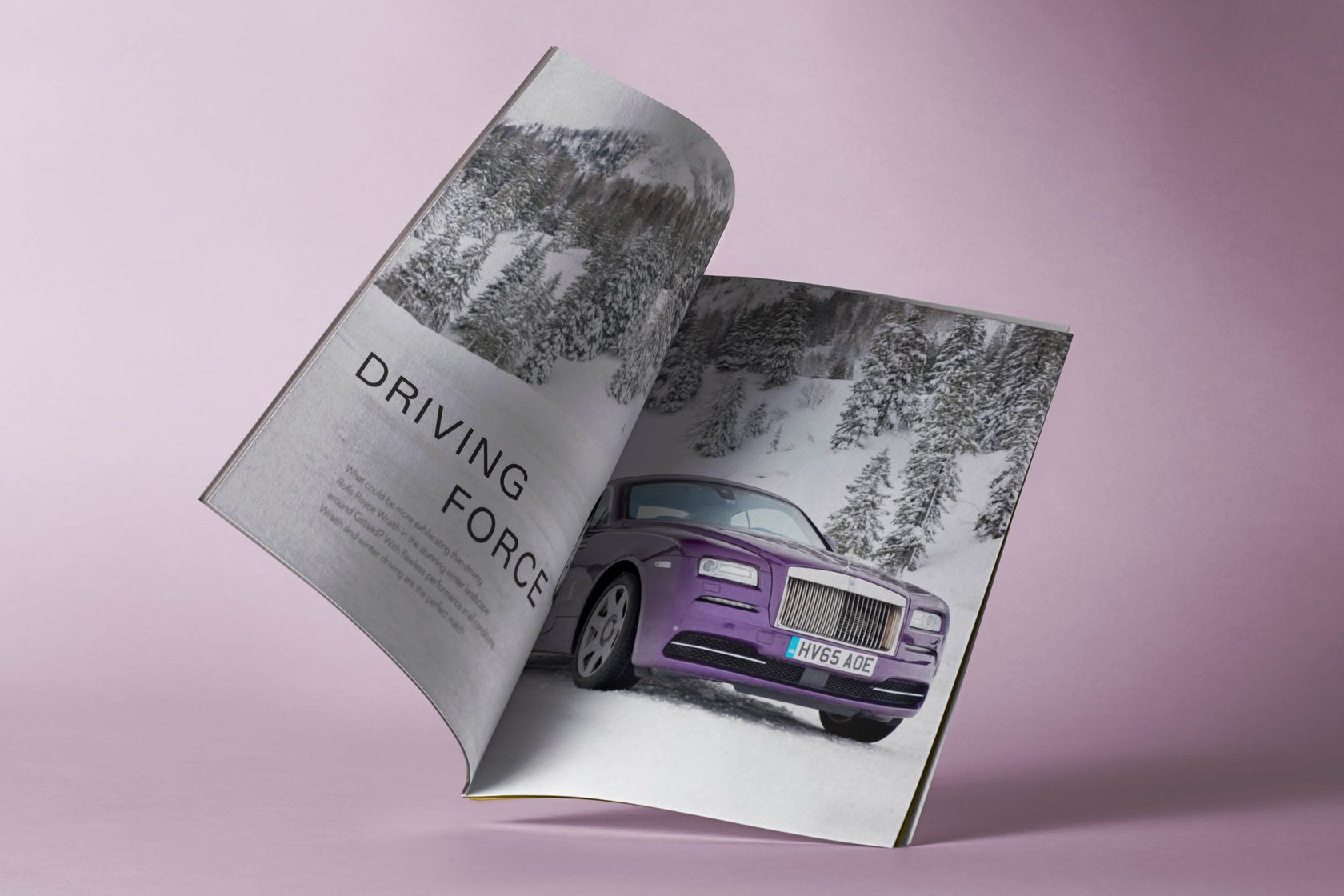
Rolls-Royce – premium content built for both brand and business.
Dialogue helped Rolls-Royce create a beautifully crafted magazine that echoed the marque’s bespoke ethos while engaging a wealthy audience with a mix of product and luxury lifestyle content.
The title was so successful that it evolved from a UK dealership publication into the official global magazine of the brand, distributed at scale across multiple regions. By combining ultra-premium editorial, carefully aligned advertising and regional content for dealerships, the magazine supported brand positioning while also helping the business stay relevant at both global and local level.
The later extension into multi-channel content showed how the same editorial approach could support a broader customer journey, not just a print product.
After enquiry, content should behave more like concierge
Once an enquiry is made, a configuration is started, the money is committed or the wait begins, the brand should not retreat into admin. This is where automotive content should start behaving less like campaign and more like concierge.
What that looks like in practice
That may mean:
- order updates
- behind-the-scenes production stories
- deeper access to specialists
- content about craftsmanship
- milestone communications
- tailored follow-up based on expressed interest
- human responses that make the buyer feel known rather than processed.
In ultra-premium, that can become part of the product itself. In more mainstream premium, it can still keep confidence alive between decision points.
This matters because friction causes abandonment, even after interest is established. Cox Automotive found that 24% of buyers considered dropping out during the purchase journey, with negotiation, trade-in, affordability and finance among the moments when abandonment risk peaks. The data is retailer-facing, but the lesson is wider than retail operations. If a buyer is already worried, tired, confused or unconvinced, every disconnected message makes the drop-off more likely.
Drop-off is real, but can content reverse it?
Factory-order cancellations remain a real risk: one 2023 buyer survey found 37% of respondents had cancelled their factory order, with delays, pricing frustration and poor communication among the themes driving that drop-off.
There isn’t a single industry-wide figure that isolates ‘content’ alone, but the available data suggests it can have a meaningful effect on cancellation risk when it works as proactive reassurance. One e-commerce source says clear customer updates can increase purchase completion by 17.6% because 53% of shoppers will cancel if delivery feels too slow. In other words, the content that explains what is happening, sets expectations and reduces uncertainty is not just brand garnish; it can help keep orders alive.
That matters in automotive because the same logic applies during long lead times and complex handovers. Dealerweb says long wait times can deter customers from placing orders or lead them to cancel after ordering, and recommends proactive updates and video content to keep buyers informed and engaged.
Taken together, the evidence suggests that confidence-building content does not merely support the sale - it can help protect the sale after the order is placed.
Relevance matters more than volume
The answer is not simply more content, it’s more relevant content. Premium automotive buyers do not need to be told the same story on repeat for six months. They need the next useful layer. Once the broad emotional proposition has landed, the content should become more bespoke, or at least feel more bespoke.
- Someone engaging heavily with audio design, driver assistance or sustainability should not keep receiving generic family messaging just because that was the campaign route
- Someone considering a style-led small car is not necessarily shopping for the cheapest hatchback. They may be choosing a certain kind of chic
- Someone buying into ultra-luxury is not solving a transport problem at all.
Good content strategy knows the difference.
CRM should be doing more of the work
This is where CRM and personalisation should be doing heavier lifting than many automotive brands currently allow.
The ideal is not creepy over-targeting. It is intelligent responsiveness. Use the signals available. Watch what people open. Watch what they click. Let them self-select what matters. Build email journeys that ask whether they care more about price, technology, safety, sustainability or ownership ease. Use those answers. Invite questions. Bring real people into the process, whether that is through email, social, forums or community spaces. In higher-consideration categories, a human answering properly is itself a form of proof. You can read more about our thoughts on the rise of hyper-personalised email.
Yet the sector is still some way behind buyer expectations. Salesforce reports that only 22% of OEMs and retailers can personalise communications across channels such as email and text, even though 73% of customers expect that level of relevance. The same research says 87% of executives believe this kind of messaging drives incremental sales and margin. The opportunity is obvious. So is the execution gap.
The personalisation gap remains wide.
Only 22% of OEMs and retailers can personalise cross-channel communications, while 73% of customers expect it. At the same time, 87% of executives believe that kind of messaging drives incremental sales and margin.
The buyer experiences one journey, not separate departments
There is another awkward truth here. In automotive, the manufacturer is not always the retailer, and the customer could not care less about that distinction.
A central brand campaign can be beautifully coherent and still fall apart in local CRM, dealership follow-up, finance messaging or aftersales communication. The customer experiences one journey, not separate departments. If the automotive brand is saying family, innovation, luxury or sustainability and the retailer layer is saying paperwork, price and generic automation, the promise starts to leak.
The message has to survive contact with the sales process.
That means central content strategy cannot stop at campaign assets. It has to flow through templates, nurture sequences, retailer enablement, point-of-sale materials, service messages and human interactions. Otherwise the middle goes missing again.

Harley-Davidson and H.O.G. – content as an ongoing brand relationship.
For Harley-Davidson and the Harley Owners Group (H.O.G.), Dialogue delivers multi-channel content across email, print, web, social and live events for a global membership community. The programme shows how content can do more than support a launch or campaign moment – it can sustain engagement, reinforce brand identity and create a sense of belonging over time.
With segmented email journeys, a members-only content hub, localised print editions and event-driven storytelling, the work helps turn ownership into an ongoing relationship, supporting both member value and wider commercial opportunities through partnerships, events and retention.
Find out more about our work with H.O.G.
Measurement has to grow up
Automotive marketers are understandably tempted to grab whatever is measurable and make it stand for impact. A click-through rate, a time-on-page figure, an email open rate, a social engagement spike are all useful signals, but they’re weak substitutes for actual understanding.
In a category like this, not everything important is easily measurable and not everything measurable is especially important. Looking for perfect attribution in a long, high-value, macro-sensitive buying journey is often a category error.
What marketers should actually look for
The better test is whether the content system is:
- reducing hesitation
- increasing buyer confidence
- keeping the brand’s USP clear
- moving the prospect to the next meaningful step
That requires a broader view of commercial impact. Not just who clicked, but who came back. Not just who downloaded, but who deepened. Not just who filled in a form, but who showed up better informed, more confident and closer to action.
The next advantage will belong to brands that build confidence, not just campaigns
Premium automotive does not need more launch theatre; it needs better content in the moments when buyers hesitate. And this is where demand is really won or lost – not in the first burst of attention, but in the long middle where prospects question, compare, defer and sometimes do nothing at all. The brands that pull ahead will be the ones that stop treating content as campaign support and start treating it as sales-critical infrastructure.
This is because in premium automotive, the commercial value of content is not in being seen, it’s in helping the buyer cross the line.
Ready to make content work harder?
Dialogue works with premium automotive brands to design content ecosystems that build confidence, reduce friction and support decision-making across the entire customer journey. If you’re exploring how your content could play a more direct role in progressing high-value prospects, contact us – we’d be happy to explore further.

Resources
Buyer journey study – Cox Automotive
The 4 Key Drivers of Car Shopper Satisfaction – Cox Automotive
Biggest concerns among prospective European EV buyers – McKinsey & Company
Order cancellation rate – 50 Folds
Long wait times can deter customers from placing orders – Dealerweb
22% of OEMs and retailers can personalise communications across channels - Salesforce
Related articles

Read more insightful articles
See more from the blog
When every yacht is different, how do you communicate what makes your brand distinctive?

Beyond the click – are we measuring email too narrowly?

Dialogue shortlisted for 10 International Content Marketing Awards 2026
Tactical gravity: why automotive launches can drift away from strategy
Proud to be a winner of industry awards, recognised as content marketing experts in print and digital media.